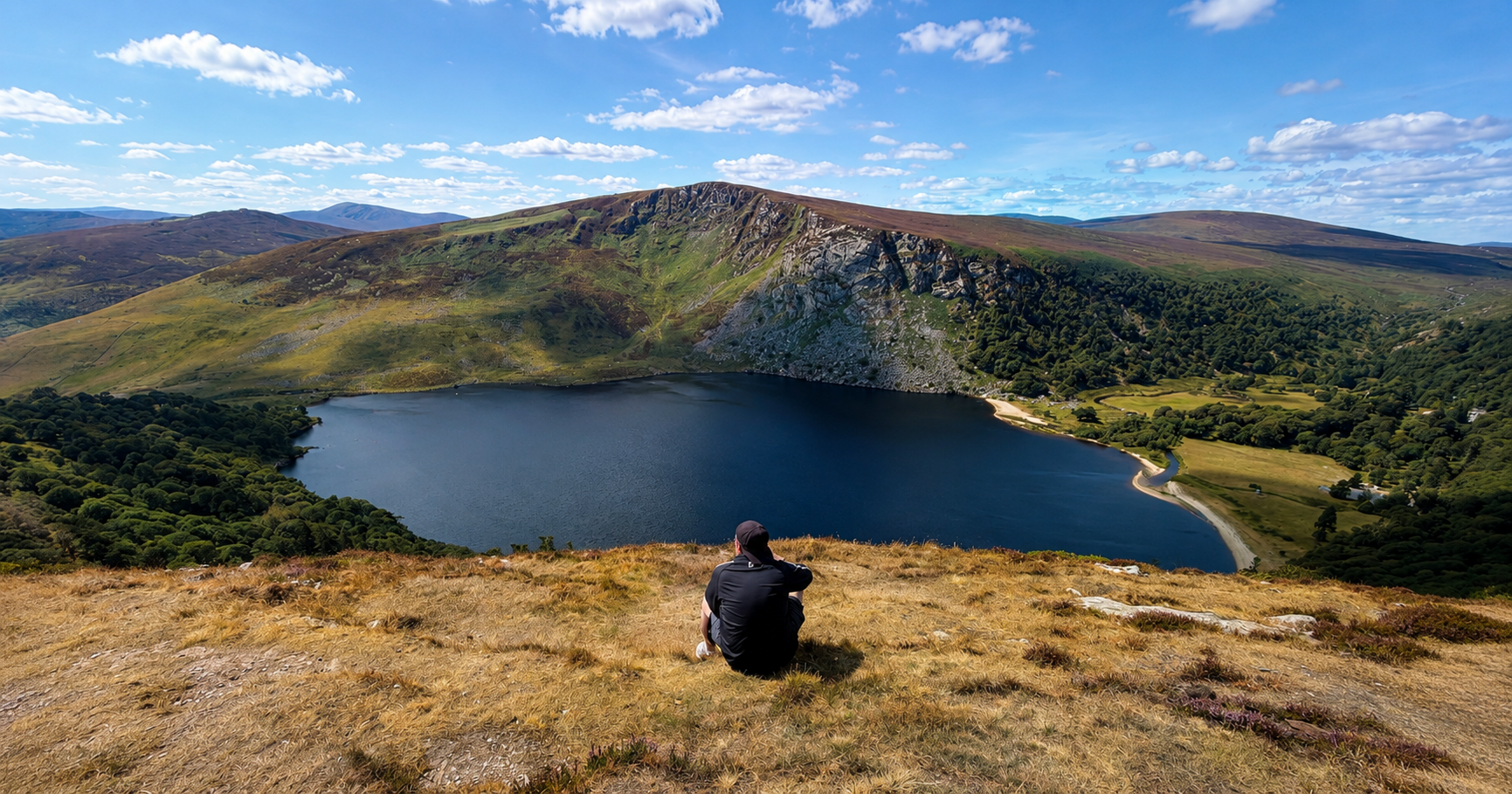
I Don’t Know What This Means Yet
I have a dangerous habit.
Give me something painful enough and, eventually, I will turn it into a story.
I will find the beginning. I will identify the moment everything changed. I will work out who failed whom, what I should have known, what I know now, and somewhere near the end I will find a sentence that makes the whole bloody thing mean something.
I have been doing it for most of my life.
For a long time, I think it saved me.
There are worse ways to survive.
Some people drink. Some disappear. Some bury things so deeply that eventually they forget where they put them.
I have done some of those things too.
But I write.
Writing gave shape to things that otherwise felt shapeless. It allowed me to take memories that arrived like broken glass and arrange them into something I could hold without bleeding quite so badly.
Before I wrote books, I wrote sermons.
Before the sermons, there were poems and journals and scraps of paper covered in whatever was happening inside my head.
Then came blogs.
Then Redemptive Trauma.
Then another blog.
Then another name for the blog.
Then Scotland.
Apparently, if something happens to me, there is a reasonable chance I will eventually give it a title.
That isn't necessarily a bad thing.
Stories are what we do with things that arrive without explanations.
This happened.
Then this happened.
Therefore this must be what it meant.
Real life is rarely that tidy.
Stories are.
That may be why I have always loved them.
If I can understand what happened, I can survive it.
If I can name the villain, I know where to put the anger.
If I can identify my own failure, I know where to put the guilt.
If I can discover the lesson, perhaps the suffering wasn't wasted.
And if I can find redemption somewhere near the end, maybe I can convince myself the whole thing was leading somewhere.
I have spent years doing this.
Sometimes well.
Sometimes badly.
Sometimes far too quickly.
Lately, I have begun to wonder whether I learned the trick too well.
Because there is something seductive about being the person who controls the narrative.
Even when every fact is true, a story can still distort reality.
You decide where it begins.
You decide which details matter.
You decide who gets a paragraph and who gets a sentence.
You decide what caused what.
You decide whether something was betrayal, consequence, tragedy, deliverance or all four.
And then you choose where to put the full stop.
That is an extraordinary amount of power.
Especially when the story is your own.
I know this because I have rewritten my life more than once without changing many of the facts.
The young priest told one version.
The man who lost the priesthood told another.
The recovering addict told another.
The angry man told another.
The father told another.
The victim told another.
The guilty man told another.
They weren't lies.
They were angles.
And an angle becomes dangerous when you mistake it for the whole picture.
One of the hardest things I have had to learn is that two things can be true without one cancelling the other.
I can have been harmed and have harmed other people.
Someone else can have failed me without making my failures disappear.
Trauma can explain behaviour without granting immunity from its consequences.
An institution can act badly and still be right about something.
I can love someone and still be unsafe for them.
I can regret something without being entitled to restoration.
Those aren't particularly satisfying sentences.
They don't wrap themselves around a neat redemption story.
They leave things hanging.
Maybe that is the point.
Because the fact that I can make something meaningful does not mean I yet know what it means.
Scotland is teaching me that.
Or at least I think it is.
See?
There I go again.
It would be very easy to write the story of my return.
I was born in Glasgow.
Taken to Canada as a baby.
Raised on stories of the place we came from.
Four decades later, after a life that did not exactly follow the brochure, I came back.
Then I found graves.
Family.
Churches.
Football.
The Clyde.
The Atlantic.
Old names.
Old stories.
Pieces of myself scattered across a country I barely remembered but had somehow spent a lifetime imagining.
You can practically hear the film score.
The prodigal comes home.
The exile returns.
The broken man discovers where he belongs.
It's a good story.
I could write the hell out of it.
Which is precisely why I am not entirely sure I trust it yet.
I have been back less than two months.
I don't know what Scotland means.
I know what it feels like right now.
That isn't the same thing.
I don't know whether this is home.
I know there are moments when it feels like it.
I don't know whether coming here was brave or impulsive.
It may have been both.
I don't know whether I am rebuilding my life or simply rearranging the wreckage somewhere with better scenery.
I don't know whether I will stay.
I don't know what relationships will survive the distance.
I don't know what work will eventually look like.
I don't know which parts of my old life I will miss desperately six months from now.
I don't know whether some of the things that currently feel like endings are endings at all.
And there is something uncomfortable about admitting that publicly.
I am supposed to be the guy who finds the line.
That was part of being a preacher.
You could walk into a room full of grief, confusion, anger or uncertainty and, eventually, you were expected to say something.
Not necessarily fix it.
But name it.
Give people language.
Help them find a place to stand.
I became very good at that.
Perhaps too good.
Sometimes the most honest pastoral thing anyone could have said was:
I don't know.
This is terrible.
I don't know what happens next.
And I am staying here with you anyway.
Maybe I need to offer myself the same thing.
I don't want to stop telling stories.
I couldn't if I tried.
They have carried me through things I did not yet know how to understand.
They have introduced me to people I would never otherwise have known.
They have allowed people carrying their own shame, grief, addiction, failure and loneliness to recognize something of themselves in me.
They have given me language when silence felt unbearable.
But perhaps stories are meant to help us live.
Not replace living.
Perhaps everything does not need to become meaningful while it is still happening.
Perhaps some wounds do not need an immediate lesson.
Some relationships do not need a verdict.
Some journeys do not need a destination before we have walked them.
Some losses may simply be losses.
Some beautiful things may simply be beautiful.
And maybe home does not have to become another theological metaphor before I have even worked out where I keep the fucking laundry detergent.
I don't know yet what coming back to Scotland means.
I don't know what will be rebuilt here, what will remain broken, or which pieces of the life I left behind will eventually find their way back to me.
Normally, this is where I would tell you what I have learned.
I would find the line.
I would make it mean something.
But perhaps this time the more truthful thing is to leave some space on the page.
I am here.
The story is still happening.
That will have to be enough.