We Couldn’t Afford Our Own Empire
Darien, English gold and the bargain that made Great Britain
A few days ago, I stood outside O’Neill’s in Glasgow’s Merchant City, grinning at the Saltire filling the windows of an Irish pub.
I wrote about the flag. I wrote about welcome and the Irish family in Toronto that had once made room for Scotland. I called the piece A Room for Scotland.
I did not write about the merchants.
That omission is part of the story.
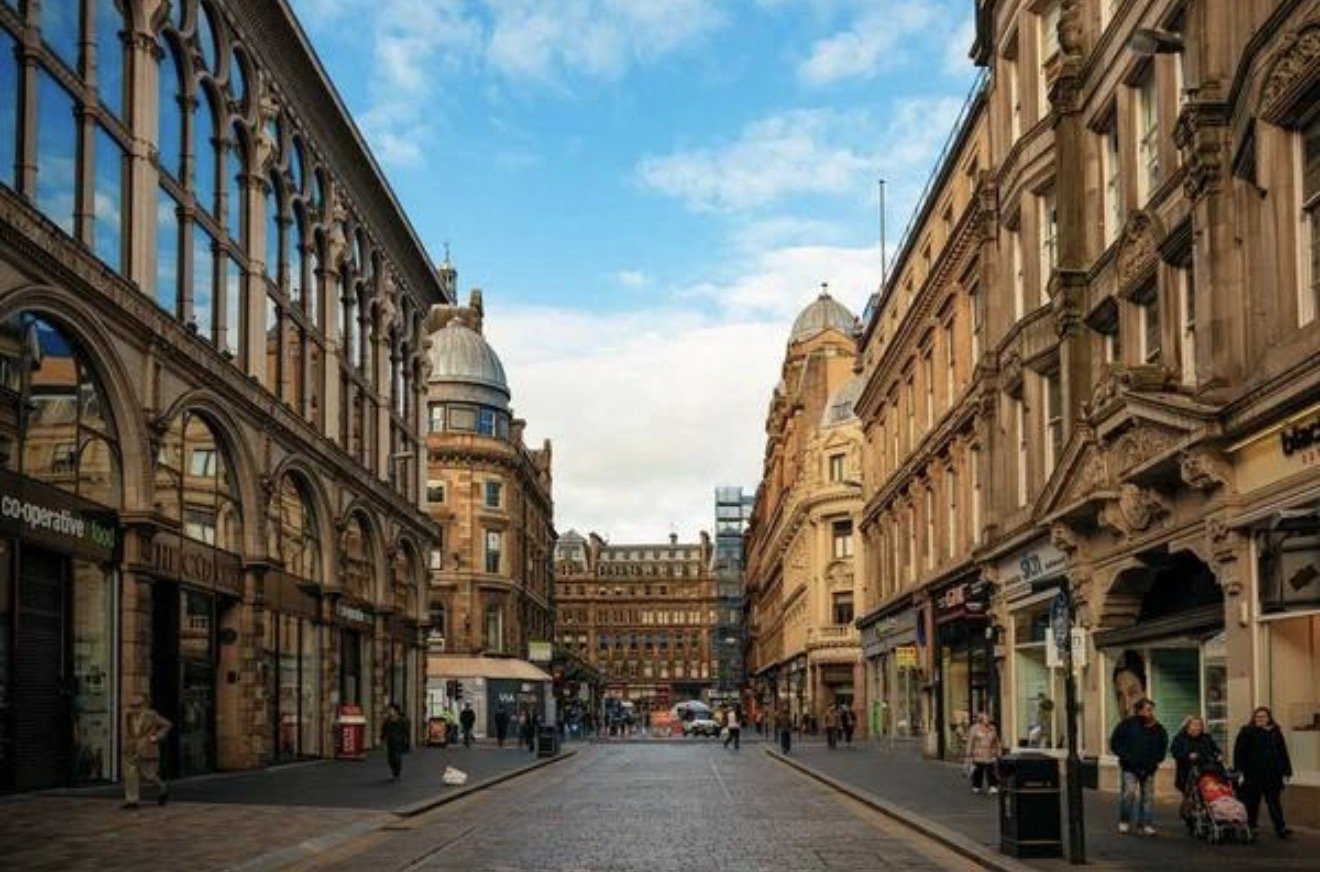
Merchant City is not simply a convenient name for a district of restaurants, pubs, expensive flats and handsome old buildings. The wealth that shaped this part of Glasgow came through merchants trading tobacco, sugar and other commodities produced across the Atlantic world.
Much of that production depended upon enslaved people.
The buildings are beautiful. That is part of the problem. Empire survives most easily when its profits become architecture and the architecture becomes scenery.
I returned to Scotland wanting this country to become more than an inheritance. I wanted to know it as weather, work, community and ordinary life. But inheritance is not a menu. If I am going to claim Scotland as mine when the flag offers welcome, I do not get to disown it when the history refuses to flatter me.
Before Glasgow’s merchants became rich inside the British Empire, Scotland tried to build an empire of its own.
It failed.
Scotland did not learn that empire was evil. It learned that empire was expensive.
There is an iron chest in the National Museum of Scotland. Made around 1695, it held the money and documents of the Company of Scotland Trading to Africa and the Indies.
The Company was Scotland’s answer to exclusion. English laws prevented Scottish ships from trading freely with England’s overseas colonies. English companies held lucrative monopolies in Africa and Asia. Scotland had watched England, Spain and the Netherlands accumulate power and wealth abroad.
We wanted in.
In July 1698, five ships left Leith carrying around 1,200 people and a national fantasy. Their destination was the Isthmus of Darien, in what is now Panama.
The plan was to establish a colony between the Atlantic and Pacific and control an international trading route. Goods arriving from Europe could be carried across the isthmus and loaded onto ships bound for Asia. Scotland would no longer have to stand outside while other countries grew rich through overseas trade.
We would have an empire of our own.
The Scots called the colony New Caledonia. They built Fort St Andrew and began constructing a settlement called New Edinburgh. The names told the story before anything else did.
This was Scotland exported. Scotland planted on somebody else’s land.
The territory was not empty. Guna communities already lived there, while Spain claimed the region as part of its empire. The Guna were not passive figures waiting for Europeans to decide their future. They assessed the newcomers, rejected goods they did not want and negotiated selectively with the Scots as part of their own resistance to Spanish power.
The Company nevertheless viewed the land primarily through what it might provide. Its charter claimed rights to its treasures, mines, minerals, fishing, government and trade. This was not merely a commercial mission that went unfortunately wrong. It was, as National Museums Scotland describes it, an exercise in empire-building.
The scheme was spectacularly ill-conceived. William Paterson, its great promoter, had never been to Darien. The ships carried combs, stockings, shoes and other goods the Guna largely had no interest in buying. Agriculture proved difficult. Food spoiled. Trade did not materialise. Disease spread through the settlement.
Incompetence was not the only force working against it.
Scotland and England had shared a monarch since 1603 while remaining separate countries with separate parliaments. King William III was therefore king of both, but his foreign policy overwhelmingly protected English commercial interests.
England’s East India Company regarded the Scottish venture as a threat. English pressure drove investors away from the Company of Scotland, leaving Scots to provide almost all the money themselves. Once the colony was established, William instructed English plantations in the Americas and West Indies not to supply it.
The Scots had the same king as the English. They did not have the same protection.
By July 1699, barely eight months after it began, the first settlement had been abandoned. Only around 300 of the original 1,200 settlers survived.
A second expedition had already sailed before Scotland understood how completely the first had failed. More than 1,000 additional settlers arrived to find New Edinburgh deserted and being reclaimed by the landscape. They tried to rebuild, but Spanish forces responded. By the spring of 1700, the Scottish colony was finished.
Around 2,500 people had sailed from Scotland. Only a few hundred survived. The failure cost approximately 2,000 lives and perhaps a quarter of Scotland’s available capital.
It was a human catastrophe, a financial disaster and a national humiliation.
The usual story moves quickly from there to the Acts of Union in 1707. Darien had ruined Scotland. England offered rescue. Scottish politicians accepted English gold, abolished their Parliament and handed away the country.
There is truth in that story. There is also mythology.
Scotland was not literally a bankrupt country being repossessed by England. But it was poor, politically vulnerable and emerging from years of failed harvests. An astonishing share of its available wealth had been placed in one speculative colonial venture. The losses fell heavily upon the merchants, landowners and political figures who had invested.
England then increased the pressure. The Alien Act of 1705 threatened to treat Scots as foreigners in England and restrict vital trade unless Scotland entered negotiations over the succession to the Crown or political union.
England wanted security. It did not want an independent Scottish Parliament selecting a different monarch, disrupting English foreign policy or creating rival trading companies.
The Union negotiations produced the “Equivalent”: a payment to Scotland of £398,085 and ten shillings. Officially, the money compensated Scotland for assuming responsibility for part of England’s national debt and helped adjust the countries’ different tax systems. A significant portion also compensated investors in the failed Company of Scotland, many of whom belonged to the same political class being asked to approve the Union.
That does not mean every supporting vote was purchased in a back room. Some members believed Union would protect the Presbyterian settlement. Some feared Jacobitism or war. Others concluded that access to English markets offered Scotland’s only realistic route to prosperity.
But money was not a footnote. Company shareholders recovered their losses. Salary arrears were paid. Offices, pensions and political advancement followed. Financial rescue, political judgment and personal interest became difficult to separate.
Robert Burns later gave the anger its permanent words:
“We’re bought and sold for English gold.”
He was right about the money.
He was incomplete about what came next.
Describing Scotland only as a nation sold to England gives Scotland too much innocence. Scotland did not abandon empire in 1707. It abandoned the attempt to build an empire independently.
The Union offered Scottish merchants something Darien had failed to secure: unrestricted access to England’s colonies and overseas markets. Article Four of the treaty gave the people of the new Great Britain equal rights to trade throughout its ports and territories.
This was not an escape from empire. It was admission to a more successful one.
Scottish merchants entered the tobacco and sugar trades. Scots became soldiers, doctors, missionaries, administrators and businessmen throughout the British Empire. Glasgow accumulated enormous wealth from Atlantic commerce and commodities produced through enslaved labour. The profits entered Scottish banks, universities, churches, businesses and family estates.
Scotland remained the smaller nation within the new British state. That did not prevent Scots from exercising enormous power over people elsewhere.
The Union did not extinguish Scotland’s imperial ambition.
It scaled it.
That is what makes Darien more difficult than either the nationalist or Unionist version. Scotland was betrayed by a shared monarch who protected English interests. England used its greater economic power to pressure Scotland into negotiations on favourable terms. The Scottish Parliament approved an incorporating Union that ended its own existence despite opposition across the country.
But Scotland was not an innocent nation dragged unwillingly into somebody else’s empire. Its ruling classes had already attempted colonial expansion. When Darien failed, many concluded that partnership with England offered greater access to the wealth they had wanted all along.
That is the deeper evil of empire. It does not only conquer people. It recruits them.
Empire finds a nation that has been excluded, humiliated or dominated and offers it a bargain: you can have a place inside the machinery, provided somebody else remains beneath you.
It converts humiliation into appetite.
Standing in Merchant City, I am not being asked to stop loving Scotland. I am being asked to stop using love as evidence of innocence.
Home is not an acquittal.
I am still learning what it means to live here rather than visit—to receive the beauty without demanding that it absolve the history.
The tragedy is not simply that Scotland was bought.
It is what Scotland agreed to help buy afterward.