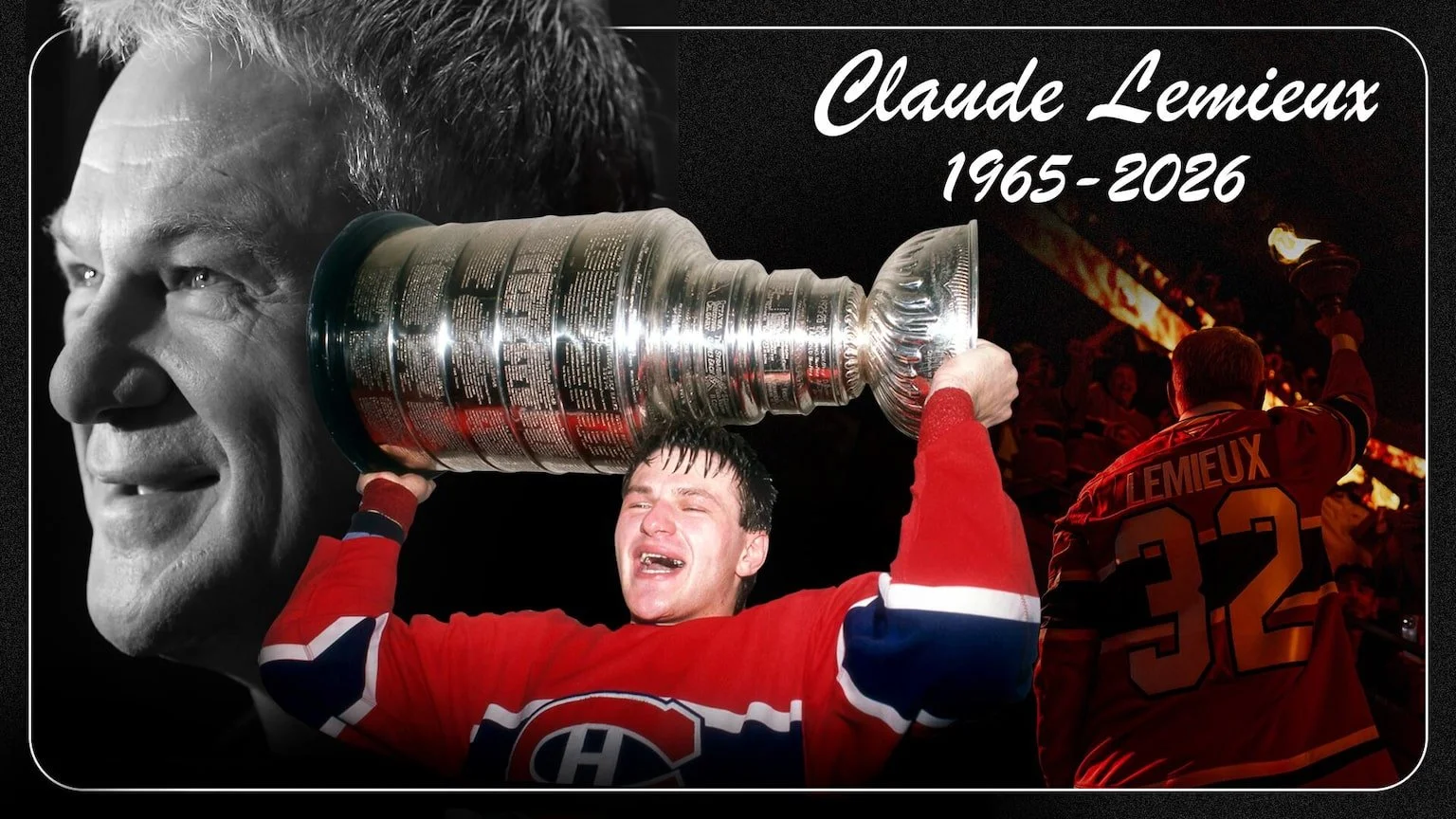
Claude Lemieux, Brain Injuries, and the Lie of the Tough Guy
Claude Lemieux spent twenty-one seasons in the NHL.
Four Stanley Cups.
A Conn Smythe Trophy.
More than a thousand games played.
A career built on being exactly the kind of man hockey culture celebrates: tough, fearless, relentless, willing to absorb punishment that would break most people.
This week, the hockey world learned that Lemieux died by suicide at the age of sixty. His family has announced that his brain will be donated to Boston University’s CTE research program in the hope that future generations might learn something from his death. They have been careful not to speculate about any diagnosis, and neither should we.
But we would be fools not to ask questions.
Because Claude Lemieux is not the story.
The story is what happens when an entire culture mistakes suffering for strength.
For decades, we told boys to play through it.
Play through the concussion.
Play through the depression.
Play through the divorce.
Play through the addiction.
Play through the panic attacks.
Play through the loneliness.
Play through the trauma.
And if you cannot play through it, hide it.
Especially if you are a man.
Especially if you are white.
Especially if you come from communities that still confuse emotional honesty with weakness.
I spent years working in mental health and addiction. I have sat with people detoxing. I have sat with people hearing voices. I have sat with people whose lives had collapsed so completely that they could no longer imagine a future.
What struck me was not how sick they were.
What struck me was how long they had been pretending.
Most people do not suddenly fall apart.
Most people spend years carrying unbearable weight while everyone around them congratulates them for looking strong.
That is why sanitizing addiction, suicidality, and mental illness is so dangerous.
We think we are reducing stigma.
Often we are simply making suffering invisible.
Your son does not need another slogan.
He does not need another awareness campaign.
He needs permission to tell the truth.
Because the truth is that strength is not the absence of pain.
Strength is the courage to stop hiding it.
Claude Lemieux’s final gift may not be a medical discovery.
It may be forcing us to ask a question we should have asked decades ago:
How many more funerals will it take before we stop teaching our sons that silence is strength?