Good Friday: Above the Wound
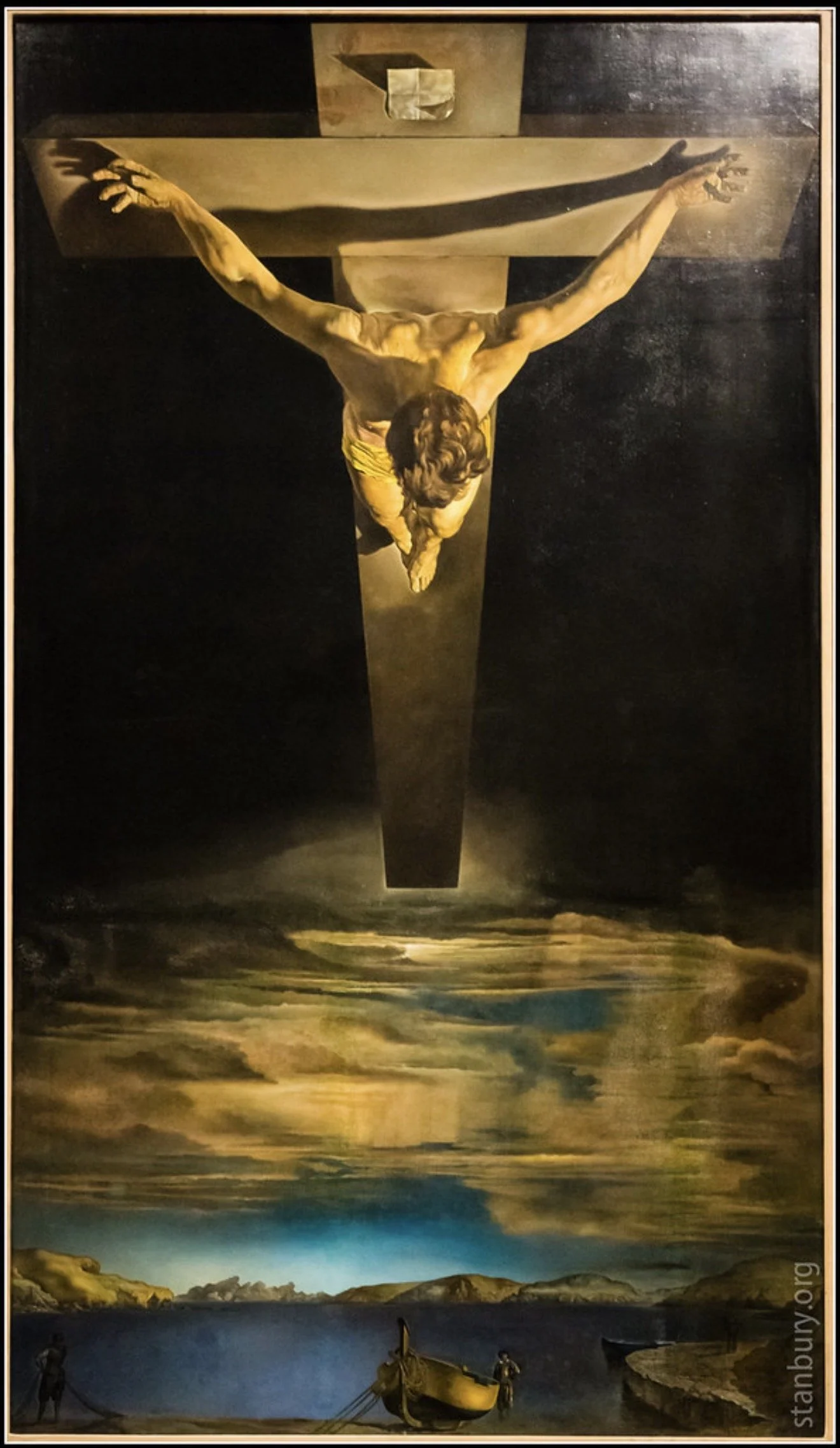
Today’s image is Salvador Dalí’s Christ of Saint John of the Cross (1951), which is held at the Kelvingrove Art Gallery and Museum in Glasgow. Glasgow acquired it in 1952, in a move that caused real controversy at the time. It was later attacked in 1961, carefully restored, and remains one of the city’s most recognized and beloved paintings.
The title matters. Dalí drew inspiration from a crucifixion sketch associated with Saint John of the Cross, the sixteenth-century Spanish Carmelite mystic. But what makes this painting unforgettable is not only its source. It is the angle. Christ is seen from above, suspended over dark water and small fishing boats below. The cross does not sit safely inside a church or shrine. It hangs over the world.
That is why it matters on Good Friday.
Dalí stripped away many of the details people expect in crucifixion art. There are no visible nails. No blood. No crown of thorns. The result is not a softer Christ, but a more terrible one. The painting does not distract with spectacle. It confronts you with exposure, weight, silence, and surrender.
Most depictions of the crucifixion pull your eyes toward injury. Dalí pulls your eyes toward abandonment. Toward height. Toward the unbearable loneliness of a body given over above the dark. This is not religious decoration. It is a theological claim.
Good Friday is not about sentiment. It is about the world showing what it does to truth, love, and innocence when they become inconvenient.
And still Christ hangs there above the waters.
Not erased.
Not explained away.
Still reigning from the place of apparent defeat.