Historic, Not Acute
Some injuries do not announce themselves properly.
They wait.
They hide inside the body while the person keeps going. Keeps working. Keeps parenting. Keeps apologizing. Keeps performing normal because normal is what the room requires.
Then years later, something shows up on a scan.
Historic, not acute.
Old, not new.
There is a strange mercy in those words. They do not fix anything. They do not undo the damage. But they tell you something important: the wound did not begin when people finally noticed it.
That is true of bodies.
It is also true of souls.
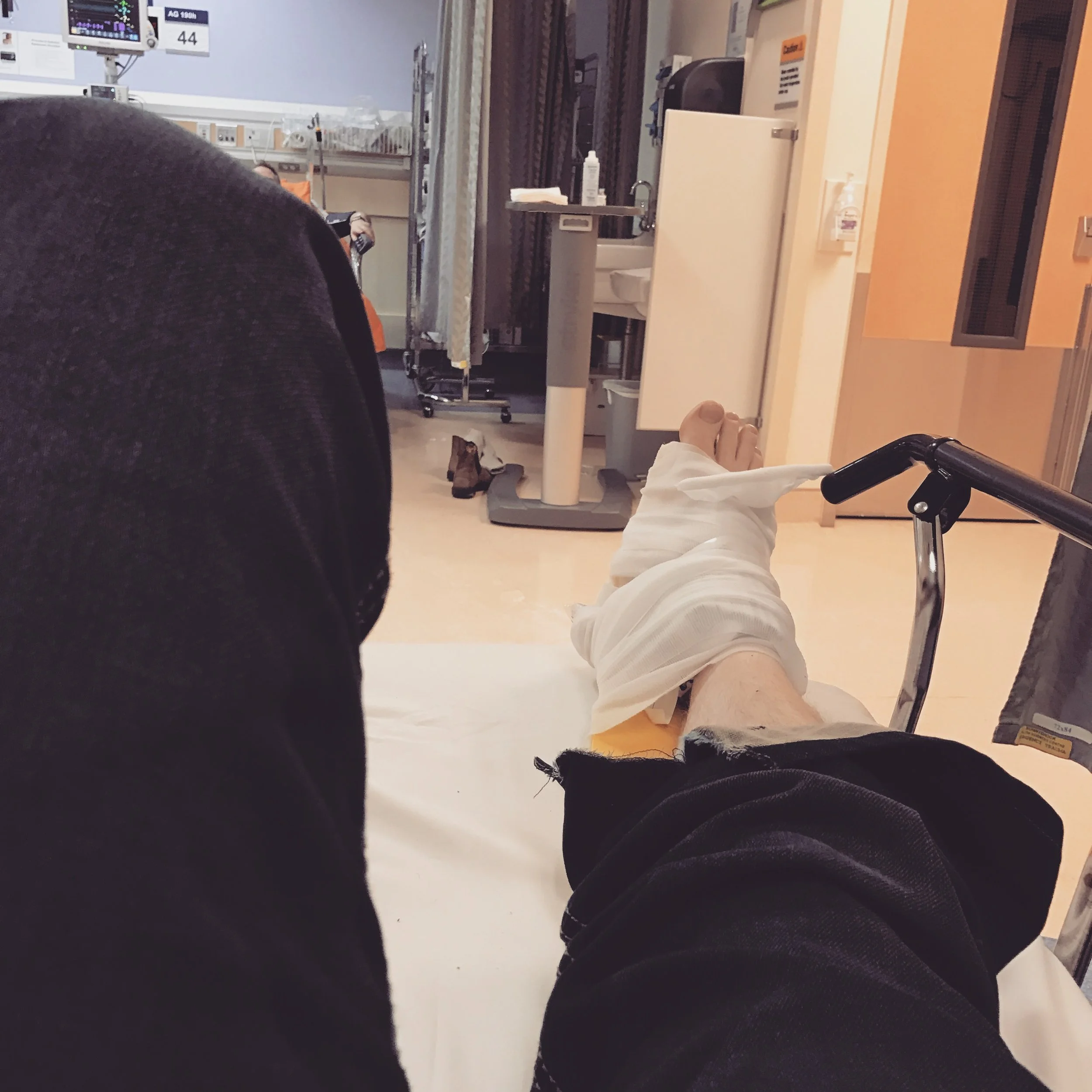
In 2017, I broke my ankle in three places.
Wheelchair. Morphine. Surgery.
Twelve weeks non-weight-bearing.
Sixty-hour workweeks anyway.
I also hit my head.
There was no CT scan.
No deeper look.
Maybe I did not say enough.
Maybe no one asked enough.
But no one took the reins.
Two weeks later, I started a new parish.
Still medicated.
Still foggy.
Still trying to hold together a marriage already ending, while leading a church I was too broken to carry.
I thought I was weak.
I thought I was failing.
I thought it was all my fault.
Then, years later, I collapsed again. Hit my head again. This time, the doctors looked more closely.
What they found was not acute.
It was historic.
That word has followed me ever since.
Historic.
As in: this has a past.
As in: this did not come from nowhere.
As in: maybe the version of the story where I simply burned out, broke down, failed, or lost my grip was never the whole story.
Maybe some of us have been walking around injured for years, judged by people who never asked what happened before the collapse.
That does not erase responsibility.
It does not make every wound someone else’s fault.
But it does change the question.
Not, “What is wrong with you?”
But, “What happened, and why did no one look closely enough?”
Redemptive Trauma was the truth as I understood it.
But it was not the whole truth.
Because even I did not know how deep the wound went.
Now I know more.
I do not want pity.
I do not want my old pulpit.
I do not want anyone to pretend the past was simple.
But maybe someone out there still cares what is real.
So here it is:
I did not just burn out.
I bled out slowly.
And no one looked.