I Remember Who Buried Me
On Bell Let’s Talk Day, the Church, and the long memory of the buried.
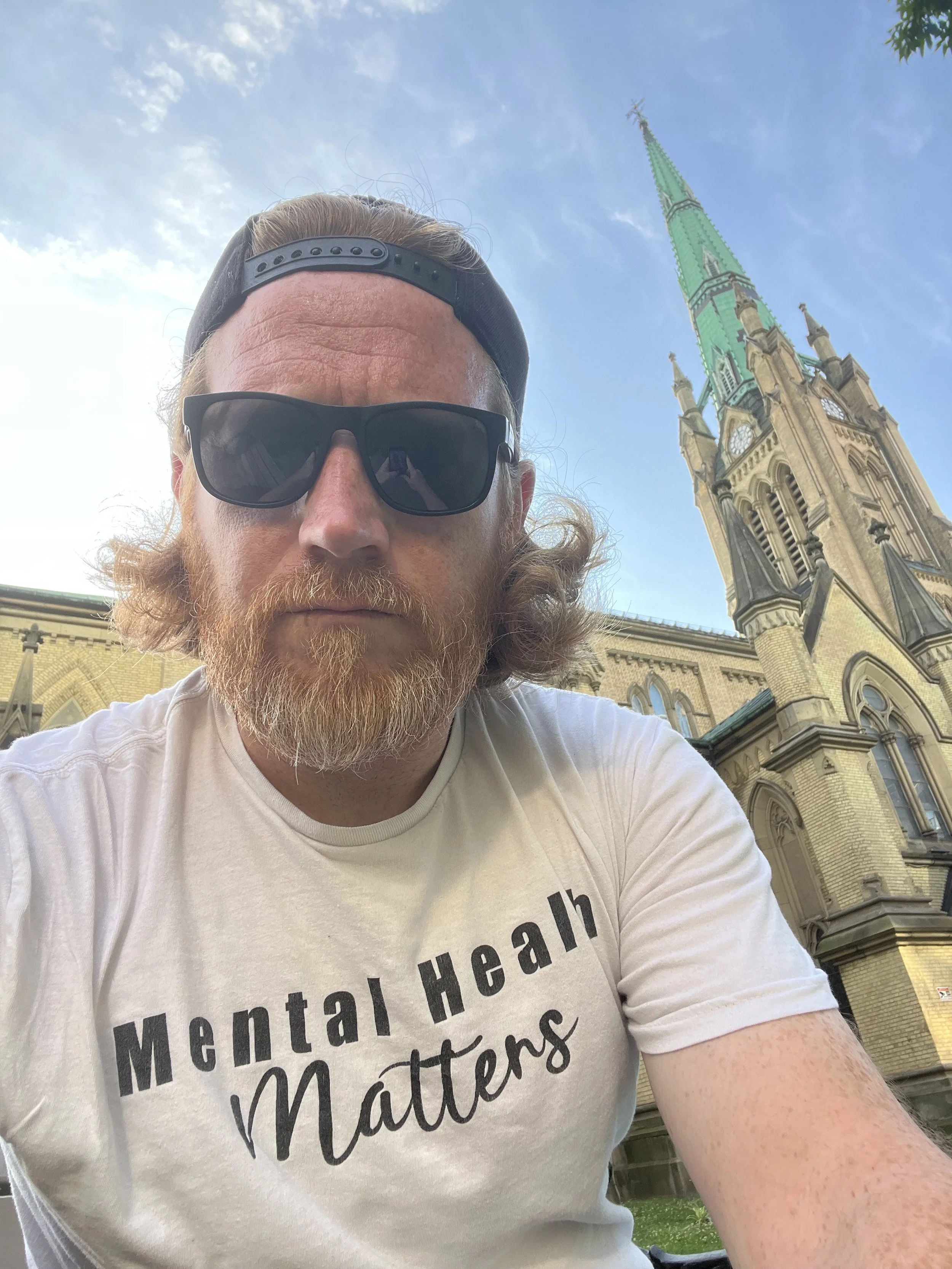
On Bell Let’s Talk Day in January, I stood in one of the largest and most fruitful Anglican communities in the Diocese of Huron and addressed the Church facing back toward Toronto. I did not go there to offer a cleaned-up testimony. I went there to name something plainly: the Church has too often used struggles with mental health and addiction not as places of care, but as grounds for scapegoating, ostracism, and control.
I am not playing games with that anymore.
Too often, institutions know how to tolerate pain only when it is quiet. They know how to make room for suffering as long as it stays private, respectable, and easy to contain. But when trauma starts speaking clearly, when addiction is named without euphemism, when the wounded stop protecting the reputation of the thing that harmed them, the mood changes. Care gives way to suspicion. Compassion gives way to control.
Because the truth shifts power.
That is why Lazarus is the right image for me now.
I am Lazarus.
Not because resurrection makes everything neat. Not because survival erases the tomb. But because I know what it is to be wrapped up, buried, spoken about in the past tense, and treated as though the story is already over.
And when Lazarus comes out, he remembers.
He remembers the silence.
He remembers the stone.
He remembers who stayed near.
He remembers who walked away.
He remembers who buried him.
And folks, I remember who buried me.
That is not bitterness. That is memory.
The Church often fears the memory of the wounded because memory tells the truth institutions would rather manage. But the long memory of the oppressed is not a threat to the Gospel. It is one of the places the Gospel becomes visible. The prophets were not punished for lying. They were punished for remembering out loud. They refused to call peace what was really abandonment. They refused to call order what was really silence enforced by power.
That is the line I am standing in now.
I know I am not the only one.
There are many who have been spiritually managed instead of loved. Many whose pain was turned into suspicion. Many who learned that once they became inconvenient, their wounds would be used against them. Many who were asked to disappear parts of themselves in order to belong.
Enough.
The Church does not lose credibility because wounded people tell the truth. It loses credibility when it asks them to stay silent for the sake of appearances. Healing does not begin when memory is erased. Healing begins when memory is finally met with honesty, care, and the courage to stop lying about what happened.
So no, I am not here to make this easier for anyone.
I am here to witness.
To say that being buried is not the end of the story.
To say that resurrection is not respectability.
To say that the people you tried to scapegoat are still here.
Still speaking.
Still remembering.
Still rising.
I am Lazarus.
And I’m not the only one.