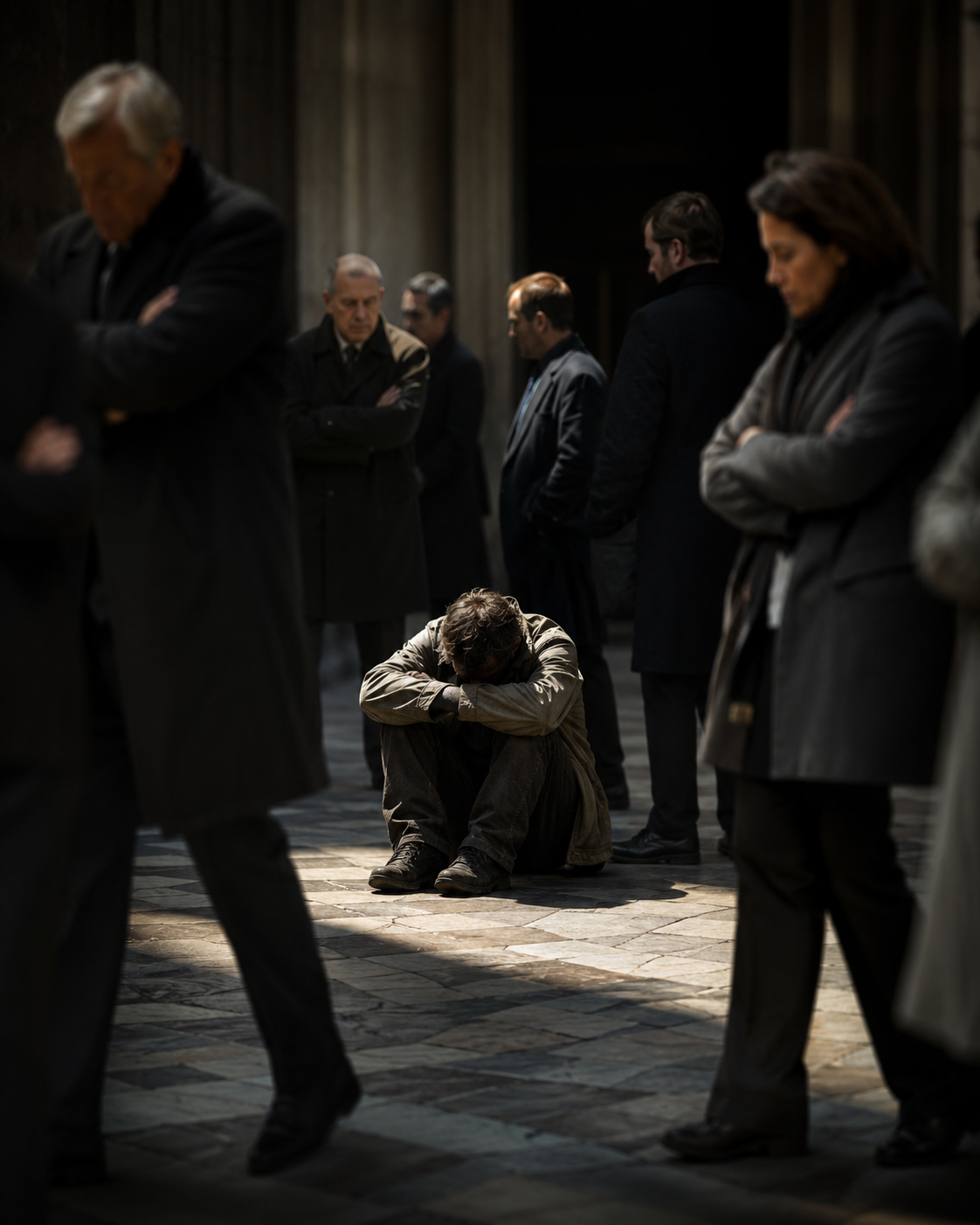
We’re Not Like Them
The most dangerous sentence in modern society is not “I hate them.”
It’s:
“We’re not like them.”
Because hatred at least acknowledges the humanity of another person. Hatred still recognizes someone as powerful enough to fear, oppose, or fight.
Contempt is colder.
Contempt is the decision that another human being no longer deserves understanding. No longer deserves dignity. No longer deserves proximity.
And once people convince themselves they are fundamentally different from the people they condemn, cruelty becomes remarkably easy.
History proves this again and again.
People rarely justify their worst behaviour by saying, “We are evil.” They justify it by convincing themselves they are the enlightened ones, the responsible ones, the moral ones. The clean ones.
We’re not like them.
The addict becomes disposable.
The mentally ill become inconvenient.
The disgraced become untouchable.
The poor become lazy.
The angry become dangerous.
The unwanted become a problem to manage instead of a person to understand.
And the frightening thing is how respectable contempt sounds when educated people speak it fluently.
It hides behind words like policy, professionalism, standards, optics, and safety. It presents itself as wisdom while quietly draining the humanity out of everyone involved.
You can see it all over social media now. Entire economies of public humiliation built around the performance of moral superiority. People applauded not for loving others well, but for denouncing them aggressively enough.
But Christ never built communities around contempt.
His harshest words were almost never for prostitutes, addicts, or public sinners. They were for the publicly righteous who needed someone beneath them in order to feel clean themselves.
That spirit never disappeared. It just learned better branding.
The truth is uncomfortable: under enough grief, fear, humiliation, trauma, addiction, loneliness, or rage, every human being is capable of becoming someone they barely recognize.
That should produce humility in us. Mercy. Sobriety.
Instead, many people respond by creating distance.
We’re not like them.
But the moment we stop seeing ourselves in the suffering, brokenness, and contradictions of other people, we become dangerous.
Not because we are monsters.
Because we become convinced we aren’t capable of monstrosity at all.
And that belief has justified some of the coldest cruelty in human history.