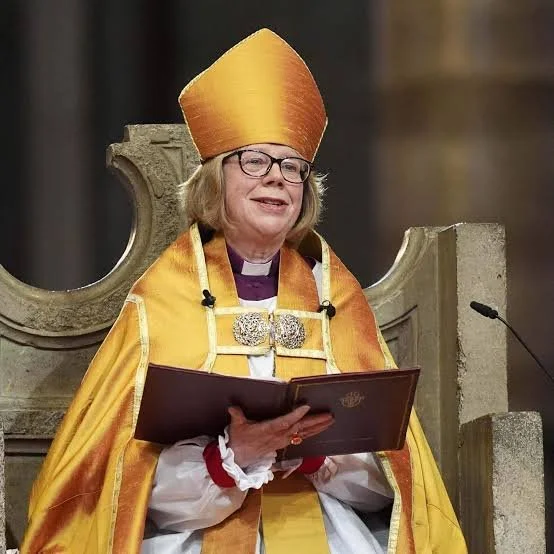
Why I Oppose Sarah Mullally
I do not oppose Sarah Mullally because she is a woman.
I oppose her because she represents the same Anglican establishment that has governed the Communion for generations, now repackaged with softer optics and more progressive language.
The Anglican Communion is no longer primarily English. The demographic, spiritual, and theological centre of gravity has shifted decisively toward Africa and the Global South. Nigeria alone dwarfs the Church of England in active Anglican life.
And yet the old colonial centres still behave as though legitimacy flows outward from London.
That is the problem.
We are still, in many ways, a white colonial church trying to market itself as morally evolved without surrendering the structures that created the imbalance in the first place.
Putting elite white women into systems historically controlled by elite white men does not fundamentally redistribute power. It often simply changes the accent, tone, and presentation of the same institutional class.
Representation is not liberation.
The future of Anglicanism will not ultimately be decided in English cathedral closes, episcopal offices, or carefully managed media appearances. It will be shaped in Lagos, Kampala, Nairobi, and among ordinary believers carrying faith without Western institutional privilege.
That reality makes many in the old establishment deeply uncomfortable.
What struck me watching attempts to seek affirmation from Rome and Western institutional networks was not confidence, but uncertainty. Even Pope Leo appeared visibly cautious and uneasy in those encounters.
Because beneath all the branding and ecclesiastical theatre sits an unresolved truth:
The Anglican Communion no longer belongs primarily to England.
And many of the people who inherited power within that system still do not know how to accept it.
This is not about opposing women.
It is about opposing the illusion that cosmetic diversification inside colonial structures is the same thing as justice.