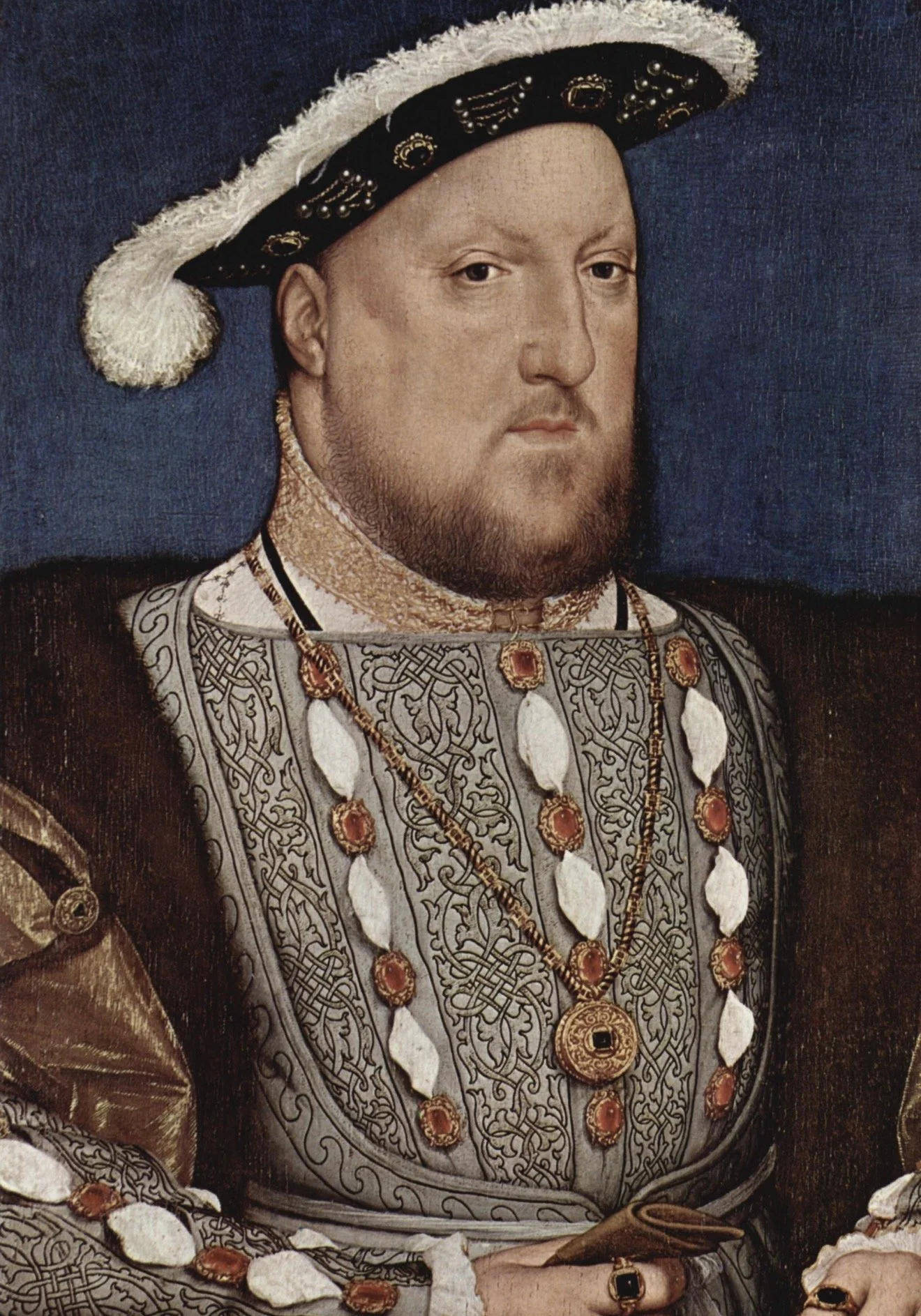
Henry VIII Went to Mass
The guest priest was 75 years old.
He had come to celebrate Sunday Mass in the small village church where I have been going since I returned to Scotland.
His homily lasted three minutes.
“Henry VIII was not a good man,” he began.
It was not the most controversial opening in the history of preaching.
Henry discarded wives who could not give him what he wanted. Two were executed. Friends, advisers and churchmen who ceased to be useful became enemies. Monasteries were emptied. Their land and wealth were taken. Anyone who placed conscience above the authority of the king understood the possible cost.
The priest paused.
“But they say Henry VIII went to Mass every day, right until the end of his life.”
The church went still.
“I do not pretend to like or understand Henry VIII,” he said. “But somewhere inside him, perhaps he knew his own depravity and continued to look for God.”
Then he looked at us.
“I invite you to do the same.”
That was the homily.
No reassurance. No neat distinction between the good people sitting in church and the bad people safely buried in history.
Just Henry VIII, the Mass and the possibility that a man can remain deeply religious while becoming profoundly destructive.
I have been thinking about it ever since.
The claim that Henry attended Mass every day until his death may be history, legend or something in between.
But Henry remained deeply religious.
He did not begin as an enemy of the Catholic Church. He began as one of its most celebrated defenders.
In 1521, Pope Leo X gave Henry the title Fidei Defensor—Defender of the Faith—after the king published a defence of the seven sacraments against Martin Luther.
The title came from Rome.
It was given to Henry thirteen years before he rejected papal authority and placed himself at the head of the Church in England. The British monarch still carries the title today.
Henry knew the doctrines.
He defended the sacraments.
He understood the language of the Church.
That is what makes him unsettling.
We prefer our villains without prayer.
We want evil to announce itself as evil. We want cruel men to mock God, despise the Church and recoil from anything holy.
It makes the categories easier.
It allows those of us who still pray, still attend church and still know the words to assume that we must be standing on the other side.
But religion does not prevent a person from becoming dangerous.
Sometimes it gives them the language to justify it.
I spent most of my adult life inside the institutional Church.
Long enough to know that people can master the language of repentance without surrendering anything.
Long enough to know that institutions are often more interested in whether a person appears religious than whether the people around him are safe.
Long enough to know that prayer, office, doctrine and sacrament can all become evidence presented in our own defence.
That is not only a problem for kings, priests or bishops.
It is one of the dangers of religion for all of us.
What apology do I replace with prayer?
What responsibility do I rename persecution?
What truth do I refuse to hear because I have already decided that God is on my side?
The old priest offered Henry the most merciful interpretation possible.
Perhaps Henry knew his own depravity.
Perhaps some part of him continued to kneel because some part of him knew that the crown could not save him.
Perhaps he kept returning because he still hoped God might.
I hope that is true.
I hope the mercy of God reached Henry VIII.
But mercy is not permission.
The Mass is not a hiding place from accountability. It is not a sacramental endorsement of the person receiving it. It is not proof that God approves of our decisions, our institutions or our version of events.
Pope John XXIII wrote in Sacerdotii Nostri Primordia that devotion to the Eucharist must “carry over into works.”
That is the difficult part.
The Mass must carry over.
It must leave the sanctuary.
It must reach the home, the relationship, the workplace, the boardroom, the bishop’s palace and the throne.
It must reach the person with less power.
It must reach the person who has been harmed.
It must reach the truth we would rather manage than tell.
Otherwise, we are not allowing the Eucharist to transform us.
We are recruiting it as a character witness.
There is a difference between knowing that I am a sinner and admitting what I have done.
There is a difference between remorse and repentance.
Remorse feels terrible.
Repentance changes something.
It tells the truth without controlling the response.
It accepts consequences.
It returns what was taken wherever returning it remains possible.
It stops demanding that the injured person demonstrate Christian mercy before the person who caused the injury has demonstrated Christian accountability.
Grace does not erase the truth.
Grace makes the truth survivable.
Henry may have defended the sacraments. He may have attended Mass. He may have knelt, prayed and confessed his unworthiness.
But what carried over into his works?
Did the Mass place any limit on his appetite?
Did it restrain his power?
Did it reach the women?
Did it reach the monasteries?
Did it reach the prisoners?
Did it reach the people required to suffer so that Henry could remain certain he was right?
Henry’s religion did not fail because he lacked religious language.
It failed wherever that language became a defence against the truth.
It failed wherever faith ceased to restrain him.
It failed wherever the king could receive the body of Christ and return to the throne convinced that the problem was still everyone else.
Perhaps Henry continued looking for God until the end of his life.
But looking for God is not the same as allowing God to confront us.
It is not the same as permitting faith to judge our conduct, limit our power and expose the stories we tell to protect ourselves.
Henry VIII went to Mass.
The question is whether he ever allowed the Mass to judge the king.
Giff on the Way Home.