The Castle That Came to Ruins
Giffen Castle, the last sketches, and what remains when the walls are gone
I came home looking for a castle and found a name.
Giffen.
It is there on the old maps of Ayrshire. Giffen, Giffin, sometimes Griffen—the spelling shifting as names do when they pass through centuries and different hands.
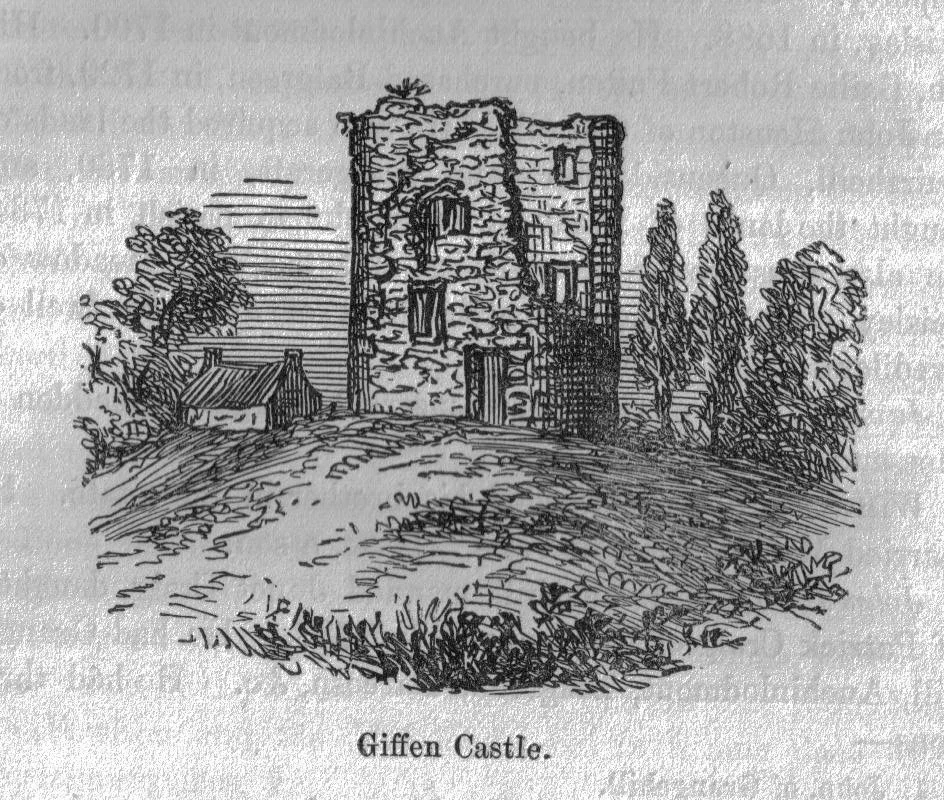
The castle stood near Barrmill, in the old parish of Beith, on a whinstone ridge above the country. It was a tower house: about thirty feet square, forty feet high, with walls said to have been six feet thick. The surviving tower is generally dated to the fifteenth century, although a charter from before 1233 already refers to land beneath the Castle of Giffen.
For generations it was associated with the Montgomeries of Giffen. Around it lay a feudal world: farms, a mill, a chapel, and a moot hill where law was proclaimed and judgment imposed.
The castle did not simply occupy the landscape.
It ordered it.
People worked its lands, ground grain at its mill and lived beneath its authority. A castle was never only a house. It declared who commanded and who obeyed.
Then, slowly, it ceased to matter.
The estate passed out of the old line. Sir John Anstruther acquired Giffen in the early eighteenth century. In 1726, permission was given to remove stone from the castle for a house at the mill. The roof was taken away. Once the interior opened to the Ayrshire rain, decline became inevitable.
Stone by stone, the castle was translated into other things.
Its walls became farm buildings. Its doorway was reportedly reused at Giffen Mill. One carved stone showed a man firing a crossbow at a wild boar—a scene once above the castle entrance, reduced to a curiosity in somebody else’s wall.
Buildings rarely disappear completely. They are redistributed.
What was once a symbol of power becomes a cowshed, a dyke, a doorway or a stone encountered without explanation. The castle loses its shape, but its substance remains nearby.
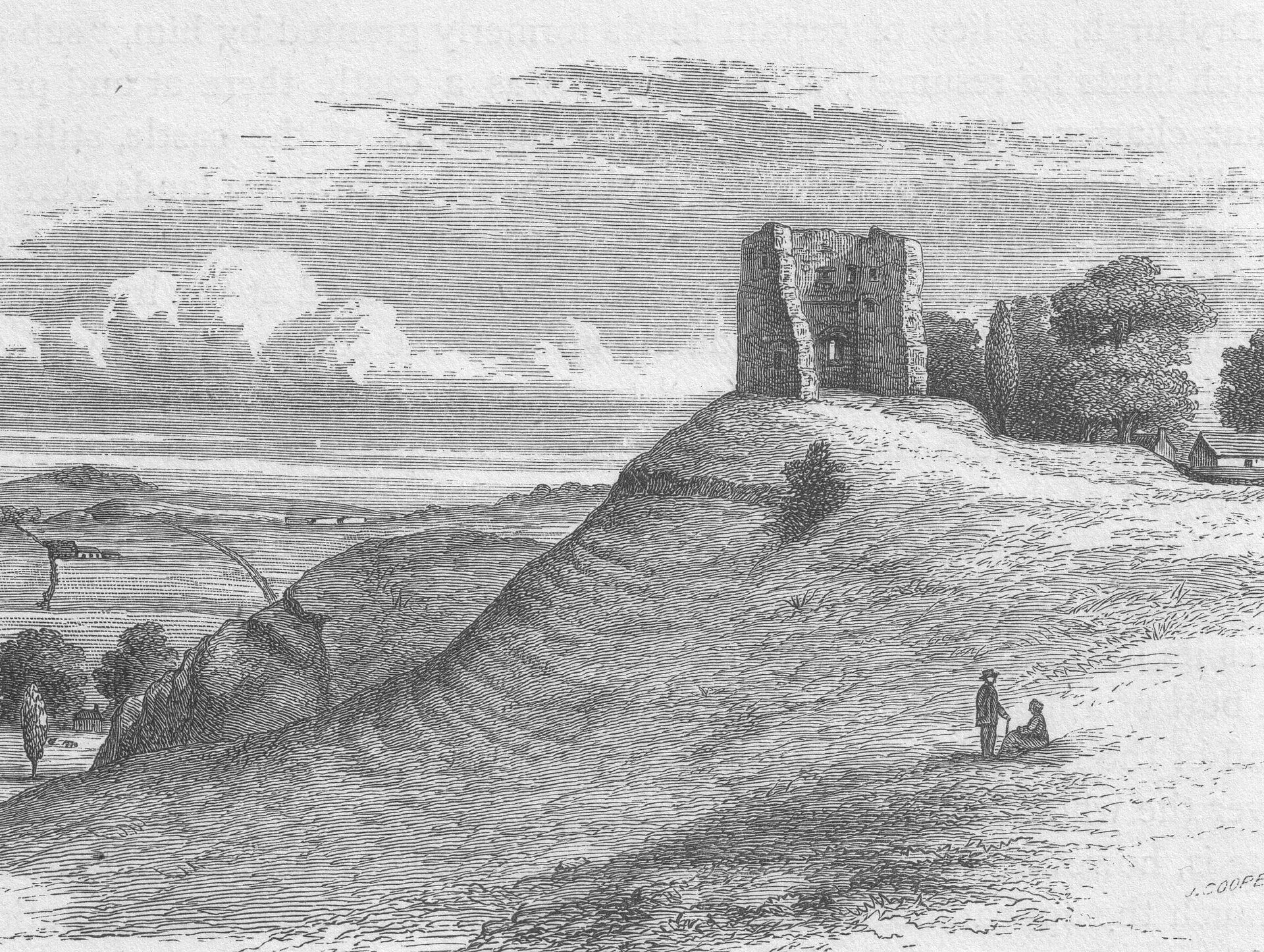
The best-known sketch is dated 1835. It shows the remaining tower alone on the ridge, roofless and exposed. Two small figures stand below it, looking up.
Three years later, it was gone.
The south wall fell in 1837. On 12 April 1838, the north and east walls collapsed. The old account says they fell during “the silence of the night,” leaving little more than a heap of stone.
There is something almost merciful about that.
No final siege.
No heroic defence.
No pipes playing while the standard was lowered.
Only walls that had carried too much weather finally surrendering in the darkness.
The last sketches are not portraits of a castle. They are witnesses to disappearance.
They preserve the interval between identity and oblivion—the moment when a thing is no longer what it was but has not yet vanished completely.
I have spent much of my life thinking homecoming meant restoration. That beneath everything that happened remained an original structure to which I might return. A foundation still square. A door still hanging from its ironwork. A name waiting above the entrance.
But perhaps there is no original structure.
Perhaps the roof came off years ago.
Perhaps pieces of what I believed myself to be have already been carried away and built into other people’s houses. Perhaps some parts remain useful, though no longer recognizable as mine.
To come to ruins is not necessarily to be destroyed.
It can mean arriving where appearances can no longer be maintained.
A ruin cannot pretend it is weatherproof. It cannot entertain guests in rooms that no longer exist. It cannot defend a reputation or explain the fissures in its walls.
It simply stands—or lies—within the truth of what happened to it.
There is a temptation, when your name appears on a map, to imagine noble blood, ancestral halls and dispossessed grandeur.
But Giffen Castle does not belong to me. A surname is not a title deed. I cannot prove descent from the people who lived behind its walls.
That may be why it means something.
I do not need to own the castle.
I recognize it.
I recognize the instinct to keep standing after the shelter has gone.
I recognize what happens when the strongest parts of a life are carried away and made useful somewhere else.
I recognize the hope that somebody might make a sketch before the walls fall. That somebody might record that there was once a structure here, not merely the rubble later generations encountered.
Even the rubble is mostly gone.
Quarrying destroyed much of the site during the twentieth century. In 1956, the Ordnance Survey recorded only three fragments of fallen masonry. No substantial castle survives above ground.
And still Giffen has not disappeared.
The mill remains.
The old Giffen aisle remains at Beith.
The ridge remains.
The fields are still green.
James Dobie’s nineteenth-century account observes that although the feudal power of Giffen had been obliterated, the country endured. Its fields and streams remained as they had before the castle’s builders were born.
The land outlived the authority imposed upon it.
That may be the real lesson of Giffen Castle.
We mistake the walls for the inheritance.
We imagine survival means preserving the structure exactly as it was. But perhaps the deeper inheritance is the ground beneath it—the part that existed before the walls and remains after they fall.
The castle had mistaken itself for something permanent.
Most institutions do.
Most of us do.
We build walls around a name, a position, a family, a vocation or a version of ourselves, and call the structure an identity. Then the roof comes off. The weather enters. Pieces are removed. Eventually, the thing we believed would protect us can no longer hold its own weight.
But the walls were never the ground.
I came home looking for a castle.
It is gone.
The name remains.
The ground remains.
And I am here.