The Sea Did Not Care
Yesterday I told a secret I had kept for almost twenty years.
Then I went to bed.
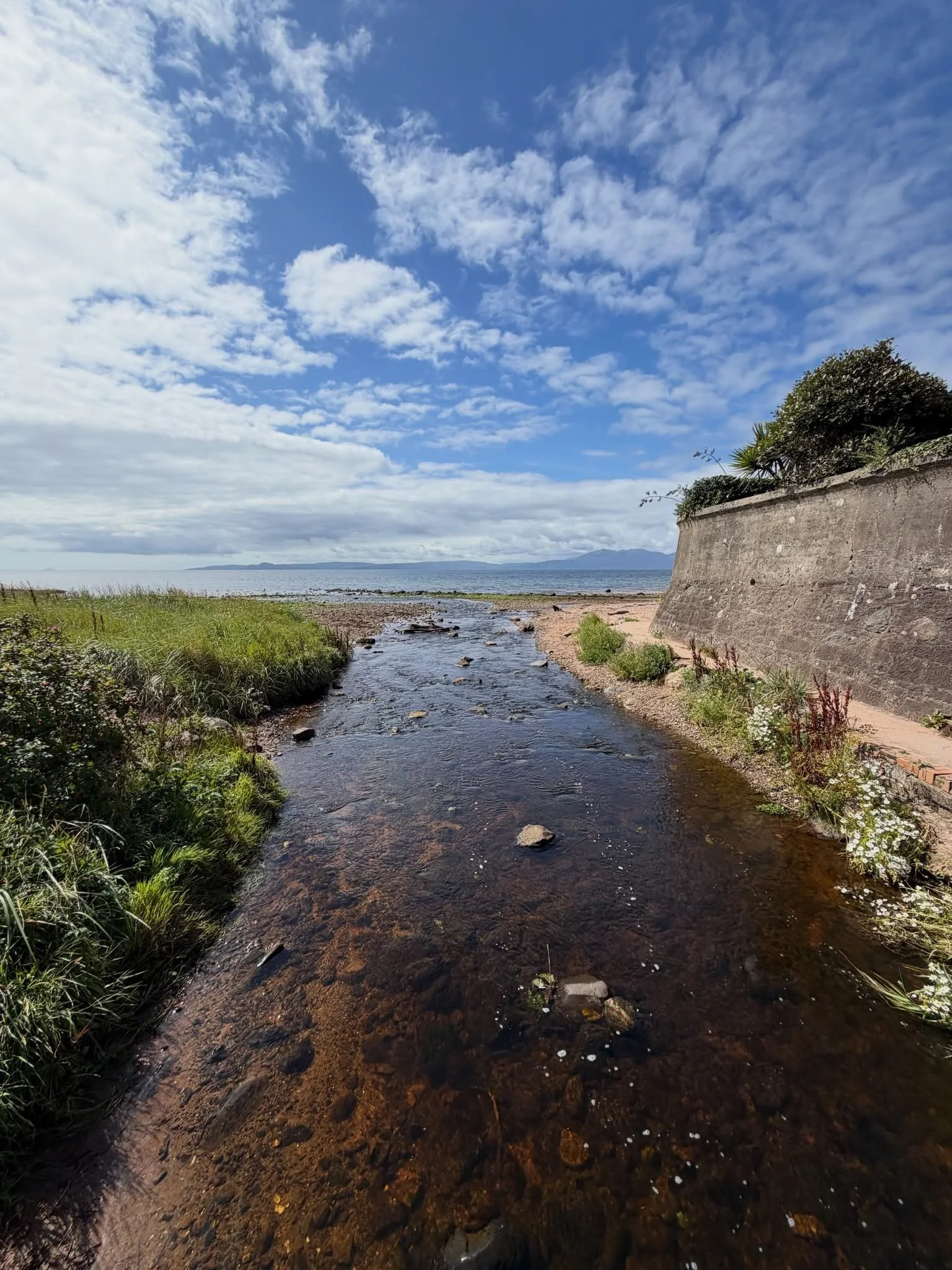
This morning, the Firth of Clyde remained entirely unmoved by the revelation.
The sea was where I left it.
Arran was still sitting across the water. The gulls continued behaving like petty criminals. Somebody was walking a dog with far more interest in whatever was rotting along the shoreline than in the ecclesiastical politics of the Anglican Church of Canada.
I found this reassuring.
For much of my life, telling the truth has felt apocalyptic.
Perhaps that comes from growing up around secrets. Perhaps it comes from being a priest. Priests spend a lot of time around confession, revelation, judgment, forgiveness and resurrection. We have rather dramatic vocabulary for ordinary human behaviour.
Tell the truth.
Repent.
Confess.
Be forgiven.
Rise again.
There is usually an organ involved.
Actual life is less theatrical.
Sometimes you finally say the thing you have been unable to say for twenty years and the next morning you still need coffee.
There are dishes in the sink.
Your phone needs charging.
Someone's dog is pulling toward something disgusting.
It looks like rain.
In Scotland, this is not prophecy.
Yesterday mattered.
But this morning nothing opened in the sky.
No revelation.
No voice from heaven.
No sudden forgiveness of everybody involved.
No sudden forgiveness of myself.
Just salt air.
Wind.
Water.
Shoes on pavement.
A man walking his dog.
The continued criminal conspiracy of Scottish seagulls.
And me.
Still here.
I used to imagine healing differently.
The right psychiatrist. The right medication. The right conversation. The right apology. The right verdict. The right confession.
Eventually something would click into place and the past would finally make sense.
It hasn't.
I know more than I did.
I also know how much I don't know.
Yesterday I wrote about rooms I was never in.
There are plenty of them.
There are also rooms I was in that I still don't completely understand.
Memory is strange that way.
So is shame.
So is love.
For years I tried to reconstruct the past until it behaved.
Who knew what?
Who said what?
Why did somebody make that decision?
Why didn't somebody stop it?
Why didn't I?
Some of those questions have answers.
Some probably never will.
There was a time when that would have driven me mad.
Maybe it did.
But this morning I walked beside the water and nothing happened.
And I mean that as good news.
I think I once needed redemption to be dramatic because suffering had been dramatic.
If something nearly destroys you, surely whatever saves you ought to arrive with comparable force.
Thunder.
Vindication.
Resurrection.
A soundtrack.
But maybe the opposite of catastrophe isn't triumph.
Maybe it is ordinary life.
A bed.
Breakfast.
A walk.
Someone who texts to ask if you're alright.
Enough money for today.
Knowing where you will sleep tonight.
A door you can close.
A body that, despite everything it has endured and everything you have done to it, still carries you down to the sea.
I could confess to almost anything when I was the one writing the indictment.
Liar.
Addict.
Boundary breaker.
Bad husband.
Failed priest.
Those words were strangely easier.
They left me in control.
Saying that somebody had hurt me was harder.
Yesterday I finally said it.
Today I don't need to prove it again.
For years, once I said something publicly, I needed to defend it.
Explain it.
Document it.
Correct whoever misunderstood it.
Find the email.
Produce the record.
Remember the date.
Another document.
Another witness.
Another fucking footnote.
There will always be another footnote.
I am tired of living in the footnotes.
Yesterday I told the truth as carefully as I know how.
Today I went for a walk.
Both things matter.
The past came with me, of course.
It always does.
It walked down the hill.
Crossed the road.
Reached the water.
Nothing disappeared.
Nothing was redeemed by the scenery.
Scotland did not acquit me.
The sea did not heal me.
It was simply larger than the argument I had been having with my own life.
For twenty years, so much of my attention has been occupied by what happened, what I did, what others did, what could be proved, and which version of me would survive the telling.
This morning there was also a gull trying to steal something.
There was wind coming off the Clyde.
There was Arran across the water.
There was somewhere to walk next.
None of the rest disappeared.
It just wasn't the only thing there.
The sea was there too.
And the sea did not care.
Thank God for that.
Giff on the Way Home.