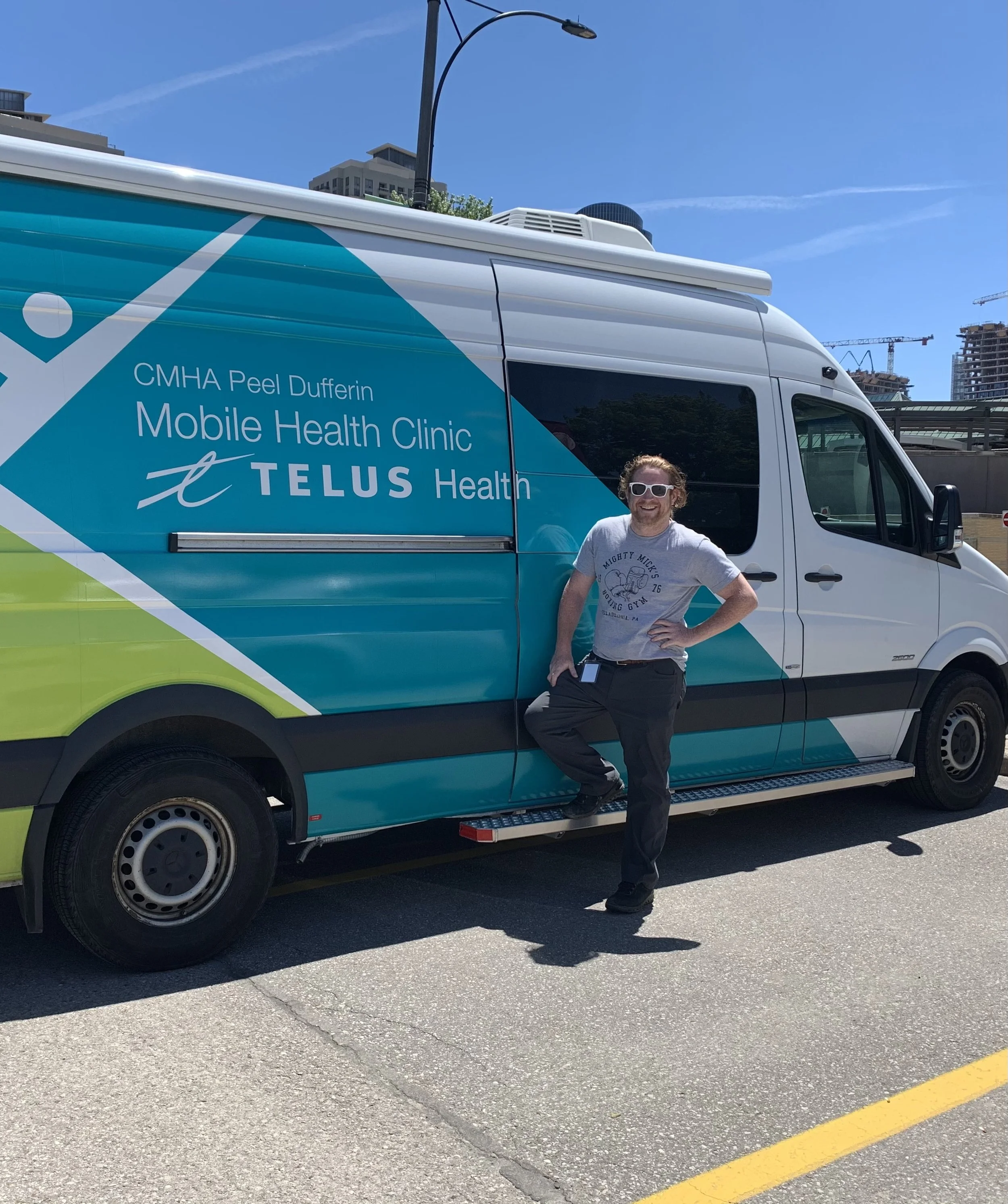
Cat Lake — Summer 2021
In July 2021, I received a call asking if I would join a response team supporting evacuees from Cat Lake First Nation, a fly-in Indigenous community in Northern Ontario, during that summer’s wildfire evacuations.
The work was coordinated through the Canadian Mental Health Association in Peel–Dufferin.
It was still the middle of COVID.
Masks were mandatory. Distance mattered. Every interaction carried a quiet awareness of risk — not only medical, but relational. Care had to be delivered through layers of precaution, uncertainty, and restraint.
At the time I was working as a Peer Support Specialist in Addiction Medicine with CMHA.
In that setting, the language of truth and reconciliation stopped being theoretical.
When an entire community is displaced from its land — while also navigating a public health emergency — reconciliation becomes something concrete. It stops being a statement and becomes a responsibility.
You show up carefully.
You listen more than you speak.
You remember that you are a guest.
That posture matters.
The people arriving were carrying multiple kinds of loss at once: the disruption of land, the stress of evacuation, the disorientation of being moved far from home, all while the world itself was still navigating a pandemic.
Our role was not to arrive with answers.
It was to be present.
Even the mask was a kind of teacher. It reminded us that there were boundaries we had to respect — physical, cultural, and historical. Responsibility belonged to us, not to the people who had already been forced to leave their homes.
Moments like that strip away the comfort of slogans.
Reconciliation is not something governments declare or institutions announce.
It is practiced — in small decisions, in how we respond to crisis, in how seriously we take the land and the people who belong to it.
That summer remains one of the most important learning experiences of my professional life.
Not because it offered clarity.
Because it demanded humility.