Formation
Almost twenty years ago now, when I was in seminary, my life was already being shaped by institutions.
When I was not in class, I was shadowing senior clergy at the Cathedral, learning the rhythms, the expectations, the posture, and the weight of a future I thought I understood. I was being formed for ministry, though I did not yet know how much formation is really about power — how to hold it, how to wear it, how to survive inside it.
And then, with the little free time I had, I went somewhere else.
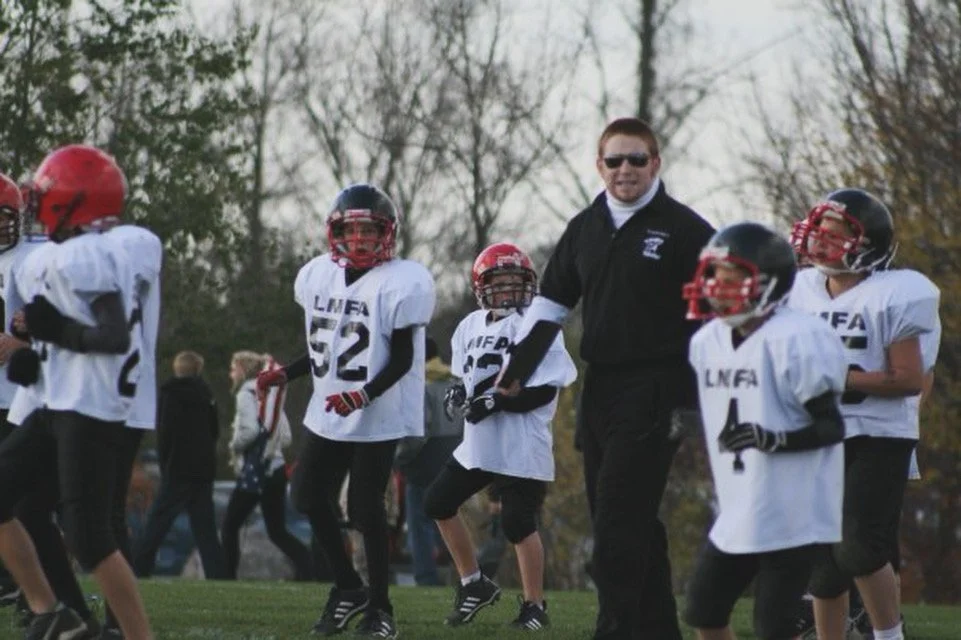
For two seasons, I coached LMFA peewee football alongside a friend, his son, and a handful of local dads. Neighbourhood kids. Early mornings. Ordinary Saturdays. No spotlight. No prestige. No grand theory. Just showing up.
I was not there to make them into anything.
I was there while they were becoming — and while I was, too.
I still remember a linebacker trying to play hurt and looking at me saying, “Coach, pain’s a part of life.”
That was not bravado. It was not recklessness. It was a twelve-year-old telling the truth as he understood it. Around him were other kids who had not hit their growth spurt yet. Kids who got knocked around. Kids who were scared sometimes. Kids who kept going anyway.
That is what I remember most clearly.
Not dominance. Not trophies. Not the mythology people like to attach to football.
Formation.
The slow revelation of character under pressure. The discovery, in real time, of who you are when something hurts, when the play breaks down, when you are smaller than the person across from you, when the outcome is no longer in your control.
We lost the championship at TD Waterhouse Stadium in the final minute.
It remains one of the best football games I have ever seen.
Not because it was clean. Because of the way they stood with each other when it was over.
That stayed with me more than the scoreboard did.
People sometimes ask why I don’t coach Rory. The truthful answer is that I have, and I do, and there are better football coaches than me. But what those years gave me was never mainly about playcalling or technique.
It was leadership without leverage. Presence without control. Authority without the illusion that you get to decide the outcome.
That is rarer than people think.
And now, as Rory suits up for another season with the Junior Argos, that old memory comes back to me again: leading an offence onto the same field where I had once been a university student, standing with boys who were becoming themselves before my eyes, and not yet having the language for why it mattered so much.
Twelve-year-old football. No ring. No empire. No brand.
Just formation — the old, hard, ordinary work of becoming, long before anyone knows what to call it.