When England Found Its Voice
There is a particular kind of hypocrisy that prefers a pressed suit, a careful statement, and the illusion of balance.
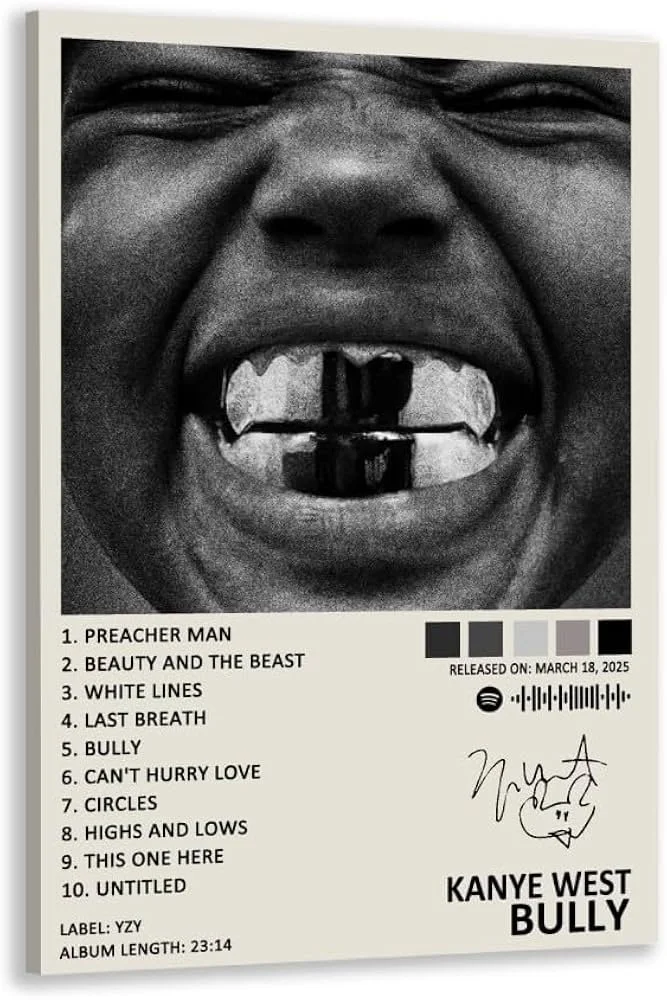
This week, England found its voice quickly enough for Ye. Wireless Festival had booked him to headline all three nights in Finsbury Park, from July 10 to 12. Keir Starmer called the booking “deeply concerning.” Sponsors pulled out. Pressure mounted. And by April 7, Ye was reportedly barred from entering the UK, with the festival collapsing soon after.
That is the record.
And let me be plain: Ye has said ugly and indefensible things. This is not a defence of antisemitism. It is not an argument that public hate should be indulged because a man is unstable, famous, or artistically useful. It is an argument about moral consistency, political theatre, and the revealing speed with which respectable institutions discover their courage when the target is chaotic, compromised, and easy to isolate.
Because there is another record.
On Easter Sunday, Donald Trump threatened Iran in language of overwhelming force and ended one message with “Praise be to Allah,” wording condemned by Muslim groups as mockery of Islamic language in the middle of a war threat. This was not private confusion or public unraveling. It was power speaking in the register of menace, on a holy day, with the confidence that it would still be managed as politics.
And that is where the contrast sharpens.
Ye is treated as an urgent contamination. Trump is treated as a diplomatic management problem. One produces statements of alarm, exclusion, and quick moral distance. The other produces choreography, caveats, and the language of statecraft. One gets a line in the sand. The other gets careful handling. British criticism of Trump’s rhetoric did emerge across politics, but Downing Street’s emphasis was on legal and operational caution, including the claim that UK bases would be used only for “defensive” action.
England found its voice quickly enough for Ye. For Trump, it found procedure.
That is not moral clarity. That is hierarchy.
The old English trick was never simply domination. It was making domination sound reasonable. Turning exclusion into prudence. Turning selective outrage into seriousness. Turning the closed door into proof of virtue. Not rage, but restraint. Not contempt, but concern. Not prejudice, but process.
But process is not innocence.
A society reveals itself not only by what it condemns, but by what it handles delicately. By whose sins become disqualifying and whose threats remain negotiable. By who is treated as beyond the pale and who is managed with gloves because the consequences of honesty would be inconvenient.
That is the deeper issue here.
Not that Ye is secretly righteous. Not that Trump is uniquely evil. Not even that England is alone in this. The issue is that respectable societies still reserve their cleanest moral language for the unstable and their most careful caution for the powerful. They are brave where the cost is low. They are nuanced where the stakes are high.
So let us stop pretending these judgments are purely moral.
They are political. They are selective. And they tell the truth about power.
If Ye’s presence was “deeply concerning,” then what exactly is the language of civilizational threat on Easter Sunday? If one man can be barred while another speaks in the register of annihilation and is still handled with greater delicacy, then the problem is not simply character.
It is the hierarchy of whose danger gets named plainly.
That hierarchy still has an accent.