Heroics Are Not Holiness
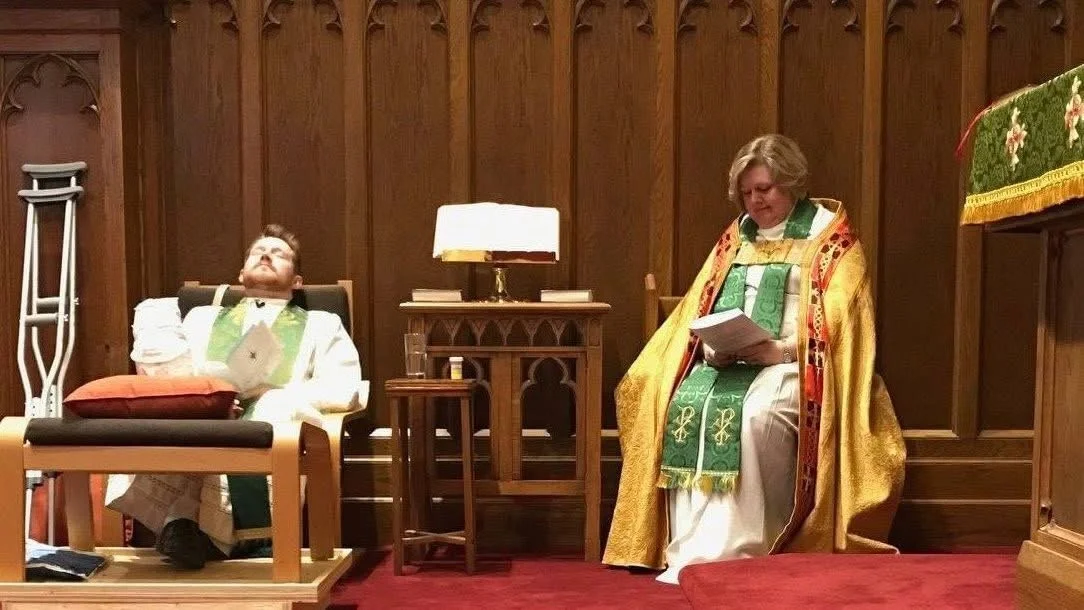
Two weeks before I began my final appointment in the Anglican Diocese of Toronto in February 2017, I slipped on black ice and fractured my ankle in three places.
I did not take medical leave.
I did not ask for accommodations.
I kept showing up.
At the time, I probably thought that was strength. Duty. Resolve. Maybe even faithfulness.
Looking back, I understand it differently.
Heroics are not holiness.
That matters because religion has a dangerous habit of baptizing self-neglect. We dress fear up as devotion. We confuse endurance with obedience. We call it sacrifice when sometimes it is simply dysfunction with church language wrapped around it.
When you are unwell, pushing through is not always courage. Often it is terror. Terror of disappointing people. Terror of losing role, title, income, approval, identity. Terror of what might happen if you stop long enough to admit that something is wrong.
I know that now more clearly than I did then.
The injury did not just hurt. It reignited a decades-old struggle with addiction and mental health. And yet I kept going, as though motion itself could save me. As though continuing to perform competence might somehow protect me from collapse.
It did not.
No vocation is worth your life.
No calling is worth your family.
No title is worth your stability or your peace.
That is not cowardice. It is theology.
Lent is not branding. It is burial. It is the stripping away of illusion. It is the season in which the Church is supposed to stop lying about what sin does, what denial costs, and how close death always is. Confession is not optional because reality is not optional. Grace means nothing if sin is not real. Resurrection means nothing if the grave is only metaphor.
And the grave is never only metaphor.
Some of us know what it is to live too close to one without admitting it.
That is why I do not romanticize heroics anymore. I do not trust religious cultures that praise exhaustion, reward over-functioning, or quietly punish people for being human. Employers have a duty of care. So do we. If you are not well enough to work, stop. Ask for safeguards. Insist on structure. Put your health in writing before the lie becomes your spirituality.
Because that is often what happens.
We start calling collapse commitment.
We start calling fear faithfulness.
We start calling self-erasure service.
It is not.
The God who raises the dead does not require us to rehearse death as proof of loyalty.
We do not praise our way out through spin, erasure, or pretending. We come out by truth. By confession. By refusing to let the grave have the last word.
And one of the truths some of us need to say out loud is this:
Keeping going nearly killed us.