Holy Week, Anne Boleyn, and the Women the Church Uses
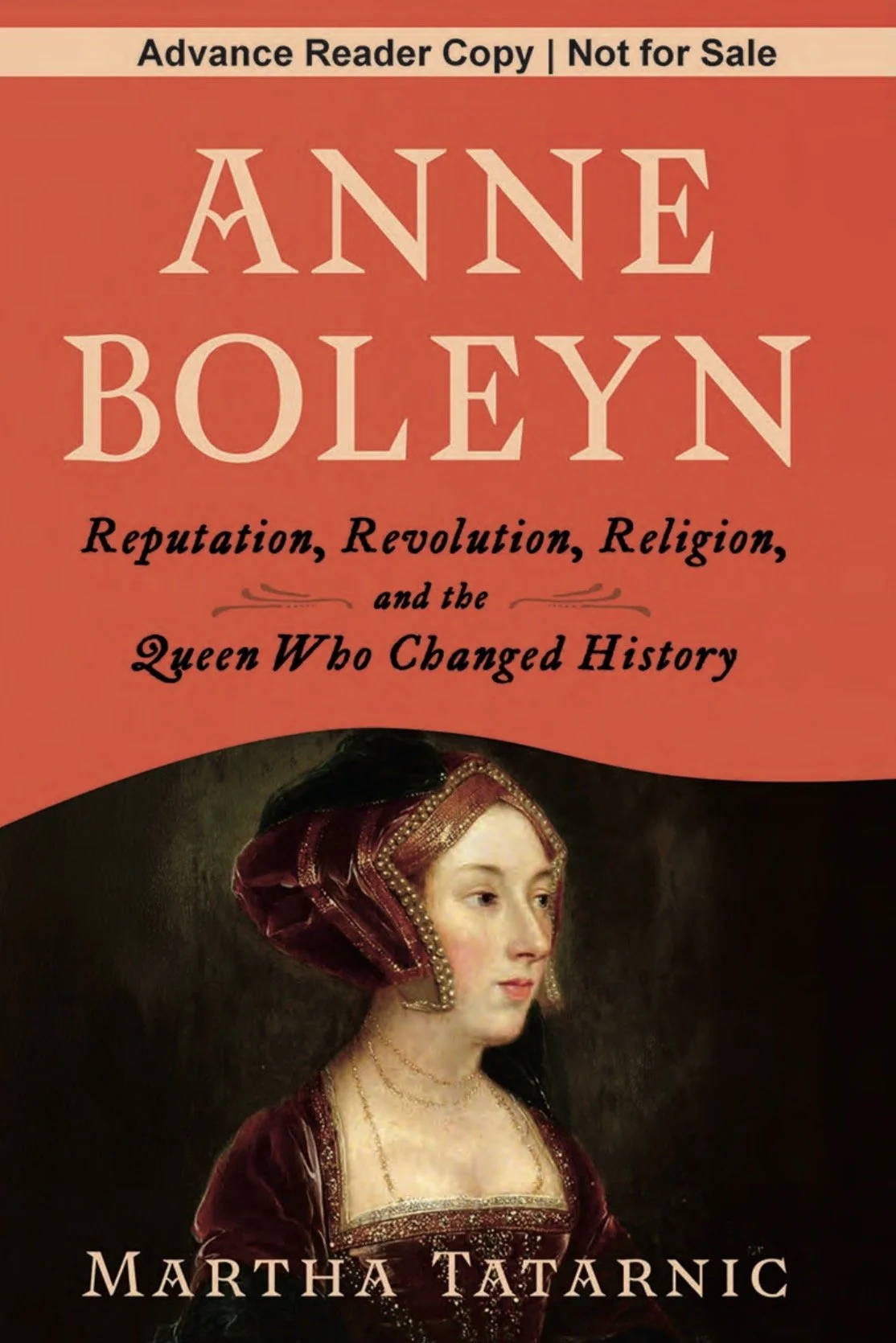
Anne Boleyn: Reputation, Revolution, Religion,
and the Queen Who Changed History
I know Martha collegially, so let me be plain at the outset: this is not a hit piece. Nor is it a detached academic review pretending to some false neutrality. I read this book in my own preparations for Holy Week, ahead of its publication in May, and that proved to be exactly the right frame. Holy Week is where the Church is forced to look again at power, performance, scapegoating, and the public destruction of inconvenient bodies.
That is why Anne Boleyn belongs here.
Martha’s project is serious, intelligent, and often compelling. She refuses the lazy Anne of popular myth: the seductress, the schemer, the manipulator, the dangerously ambitious woman who got what she deserved. She pushes back against the long habit of reducing Anne to a cautionary tale for women who are too clever, too visible, too disruptive, too difficult to control. More than that, she insists on Anne’s religious seriousness, intellectual force, and place within the English Reformation. That matters. It is a needed corrective to generations of caricature.
But correction is not the same thing as clarity.
Because the book does not simply recover Anne from misogyny. It identifies with her. Deeply. That gives the work its energy, but also its limits. Anne is not treated only as a historical subject to be reconsidered. She becomes something closer to an ecclesial ancestor: a woman wronged, diminished, misread, and yet indispensable to the story. One can feel, throughout, the pull of recognition. A woman priest reclaiming a woman whose memory has been handled, distorted, and policed by male power.
I understand that instinct. I even respect it.
But this is where I begin to resist.
Anne was not only victimized. She was also elite. She was desired. She moved within courtly power. She possessed the kind of presence that made men reorder kingdoms around her. Even where the book rightly resists crude or misogynistic fixation on Anne’s appearance, it cannot finally escape the fact that beauty, fascination, and proximity to power were part of her social reality. Anne was not simply erased by power. She was first elevated by it, used by it, adorned by it, and only then destroyed by it.
That matters too.
So, when I speak of white privilege and pretty privilege here, I do not mean it as slogan or insult. I mean it as a limit in the interpretive frame. There is always a danger when one privileged woman reclaims another privileged woman that oppression becomes the whole story, while beauty, class, access, and social advantage get treated as secondary. But they are not secondary. They are part of the machinery. Anne suffered under it, yes. She also benefitted from it before it turned on her.
And that is precisely why Holy Week is the right season for this book.
The Passion is not sentimental. It is not interested in clean branding, tidy innocence, or morally convenient victims. It is about what power does when it needs someone displayed, condemned, and consumed. Martha sees much of that with real insight. But Holy Week also teaches us to distrust sanitized martyrdom. Anne Boleyn was not a cartoon villain. Neither was she a pure icon. She was brilliant, compromised, elevated, feared, and finally sacrificed.
That is the more Christian reading anyway.
Not fairy tale. Not feminist canonization. Not Tudor gossip.
A woman caught inside the machinery of power — and consumed by it.