I Misjudged Pierre Poilievre
Pierre Poilievre has long struck me as impish, superior, and smug.
That was my judgment.
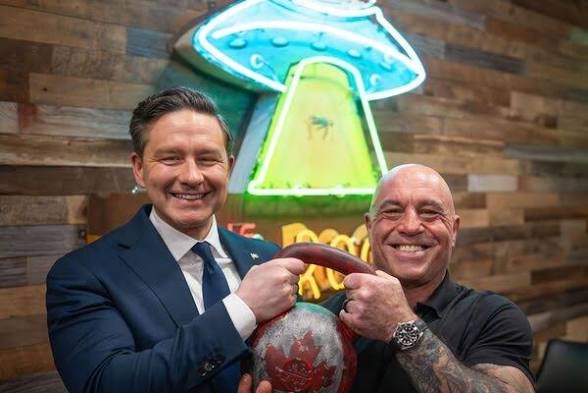
Then I watched his full conversation with Joe Rogan — more than two hours, long enough for the performance to crack if performance is all there is. Instead, I came away corrected. The episode was released on March 19 and ran just over 2 hours and 24 minutes.
I was wrong.
Let me be plain. I am not a conservative. I am not writing this as an endorsement, and certainly not as some soft-focus conversion story. I do not suddenly share his politics. But I do believe that truth matters more than tribe, and that one of the last acts of public decency left to us is the willingness to revise a judgment when reality demands it.
What struck me was not simply that he was articulate. It was that he seemed disciplined enough not to pretend omniscience. On subjects he did not know, he said so. At one point, when glyphosate came up, he flatly admitted, “I don't know anything about glyphosate,” and said he needed to do his homework. In a political culture where too many men feel the need to be the smartest man in the room on every topic, that kind of restraint matters.
What also struck me was that he did not seem eager to score cheap points at the country’s expense. Asked about conversations with Donald Trump, he said he believed in “one prime minister at a time,” that he would leave the negotiating to the prime minister, and that he was even texting to support Canada’s position. Later, when Rogan pushed him on Trudeau, he said, “I won’t criticize him on foreign soil.” That is not nothing. It suggests a man who still understands that there is a difference between opposition and vandalism.
And more than once, what came through was not contempt for the country, but genuine pride in it. He spent parts of the conversation not posturing, but selling Canada — its people, its landscapes, its character, its neighbourliness, even its tourism. He talked about Calgary and southern Alberta as home, praised the Rockies and Lake Louise, and closed by saying he was “very proud to be Canadian” and proud to bring Canada’s message to American listeners.
That matters.
We are living in a Trumpian age, and I do not mean merely an age shaped by one man. I mean an age of swagger without substance, contempt without cost, performance without depth, and grievance dressed up as courage. An age in which caricature comes easily and fairness comes hard. An age in which many people would rather be confirmed in their contempt than interrupted by reality.
I do not want to become that kind of man.
So here is the correction, plainly stated:
I misjudged Pierre Poilievre.
That does not place me on the political right. That does not mean I trust every instinct, priority, or policy attached to his name. It does not mean I have abandoned my own commitments.
It means I listened carefully enough to recognize that I had made him smaller in my mind than he in fact is.
And in a political culture increasingly ruled by sneering, that kind of honesty feels almost subversive.
You do not have to agree with a man to admit he has substance. You do not have to vote for him to recognize composure, seriousness, and discipline. You do not have to betray your principles to confess that your first judgment was unfair.
In fact, fairness is one of the principles.
Too many people now are trapped inside prefabricated moral reactions. They do not see persons. They see brands, tribes, symbols, enemies. Once they have filed someone away, they do not listen again. They do not revisit. They do not repent of shallow judgment. They simply repeat themselves with greater confidence.
That is not wisdom. It is vanity masquerading as conviction.
I have my criticisms of Pierre Poilievre. I expect I always will. But criticism carries more weight when it is disciplined by honesty. And honesty requires me to say that after listening to him properly, at length, and without the easy crutch of mockery, I came away thinking this:
In a political world full of frauds, he struck me as an honourable man.
I will eat crow when I am wrong. More people should.