Redemptive Trauma Missed the Mark
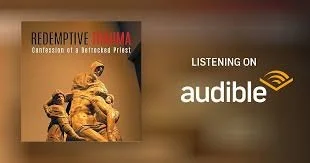
I called it Redemptive Trauma because I wanted to believe suffering could be transformed.
Not explained away. Not prettied up. Not turned into some sentimental theology for people who prefer wounded men quiet and articulate. Transformed.
I wanted to believe that the pain inflicted by institutions that preach grace while abandoning people in their hour of need could still become a place of truth, dignity, and meaning. I wanted to believe that if I told the story honestly enough, something redemptive might come of it.
That was the hope behind the book.
But hope is not the same thing as accuracy.
With more distance now, and more scar tissue, I can say what I could not say as clearly then: Redemptive Trauma missed the mark.
In Hebrew, sin is often named with the word חטא (hata) — to miss the mark. Not always malice. Not always open rebellion. Sometimes it is failure. Misjudgment. Aiming at truth and not going far enough. And that, in more than one sense, is what this book was.
I missed the mark in how I told the story.
I softened truths to protect people who never protected me. I left certain edges dull because some part of me still wanted the institution to find me reasonable, faithful, measured, safe. I was telling the truth, but I was still trimming it for ecclesial ears. Still naming harm in a register that would not offend the people who had done it.
That cost the book something.
It cost it force. It cost it clarity. It cost it the full weight of what I now know.
I also missed the mark in how I imagined redemption.
At the time, I thought naming trauma was already a form of freedom. That if I could put pain into language, healing would follow. But naming is not reckoning. Publication is not liberation. And surviving something is not the same thing as being free of it.
I know that now.
I also know the book was limited by the fact that I was still too much at the centre of it. I was writing from real pain, but also from a kind of solitude that had not yet learned how much fuller the truth becomes when it listens harder beyond itself — to Black voices, queer voices, Indigenous voices, and to others whose reading of survival, betrayal, dignity, and institution had already gone further than mine.
There are consequences to missing the mark.
One is that silence remains where sharper speech was needed. Another is that the very systems you mean to expose end up receiving one more layer of gentleness they did not earn. And maybe the deepest consequence is personal: the grief of realizing you were brave, but not yet brave enough.
Still, I do not regret writing Redemptive Trauma.
It was true as far as I could tell the truth then. It was a map of who I was. A record of survival. A first act of witness. It mattered. It still matters. But it was not the final word. It was an opening. A necessary failure. A first draft of courage.
And sometimes that is what missing the mark really is: not the opposite of truth, but the evidence that more truth still has to be told.
That is where I am now.
No more soft landings.
No more disguising the wound to make it easier for others to look at.
No more confusing articulation with reckoning.
Only truth.
And maybe that is closer to redemption than what I first imagined.
Not that suffering becomes noble. Not that institutions become holy because they harmed you. But that truth, finally spoken without fear, becomes its own kind of freedom.
Maybe that is how the mark is hit.
Not perfectly.
But honestly.