Some Wars Are Fought to Stay Alive
There are some wars you fight simply to stay alive a little longer.
Not to win.
Not to conquer.
Not even to defeat the person standing across from you.
Just to live another day.
History remembers decisive battles — the victories that redraw maps and the defeats that end kingdoms. But most of human life is lived somewhere else entirely, in quieter conflicts that never make it into the history books.
The Celtic communities of Dál Riata, the early Kingdom of Alba, and the many Irish kingdoms understood this long before colonialism was even a word.
These were small maritime societies scattered along difficult coasts and islands. Power was fragile. Alliances shifted. Norse raids came without warning. Rival clans competed constantly for survival.
Victory was rarely final.
Most conflicts were not fought to destroy an enemy. They were fought to keep a people alive.
Hold the coast.
Hold the language.
Hold the memory of who you are.
Persistence itself became a form of courage.
The monks understood this too.
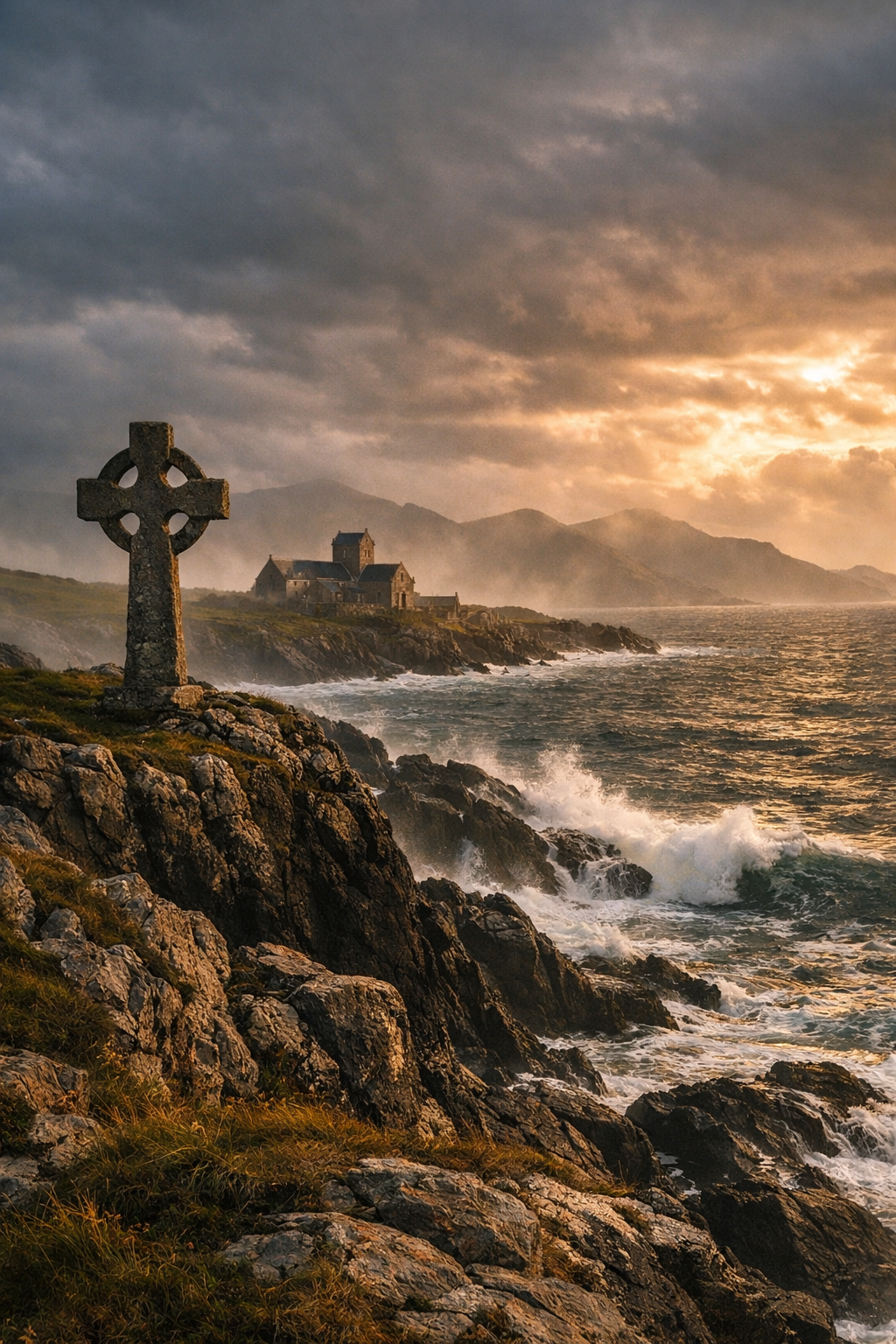
On a windswept island monastery founded by Saint Columba at Iona Abbey, early Celtic Christians spoke of peregrinatio — exile for the sake of faith.
You leave the certainty of home.
You step into a fragile boat.
You allow the currents to carry you where they will.
Not to conquer the world.
To remain faithful wherever you arrive.
People living close to the edge understand this.
Survival is rarely dramatic.
It is often quiet and negotiated.
Sometimes it looks like choosing the least destructive path available that day.
Sometimes it means asking for help.
Sometimes it means simply deciding not to disappear.
From the outside these battles can look small.
But anyone who has lived them knows the truth:
Some wars are not fought for glory.
They are fought quietly — to protect dignity, to protect hope, to keep breathing long enough for the next morning to arrive.
And sometimes that is the bravest victory there is.