Why I Could Not Vote Conservative
I have only voted Conservative once in my life.
I came close to doing it again.
And the reason I even considered it was Don Stewart.
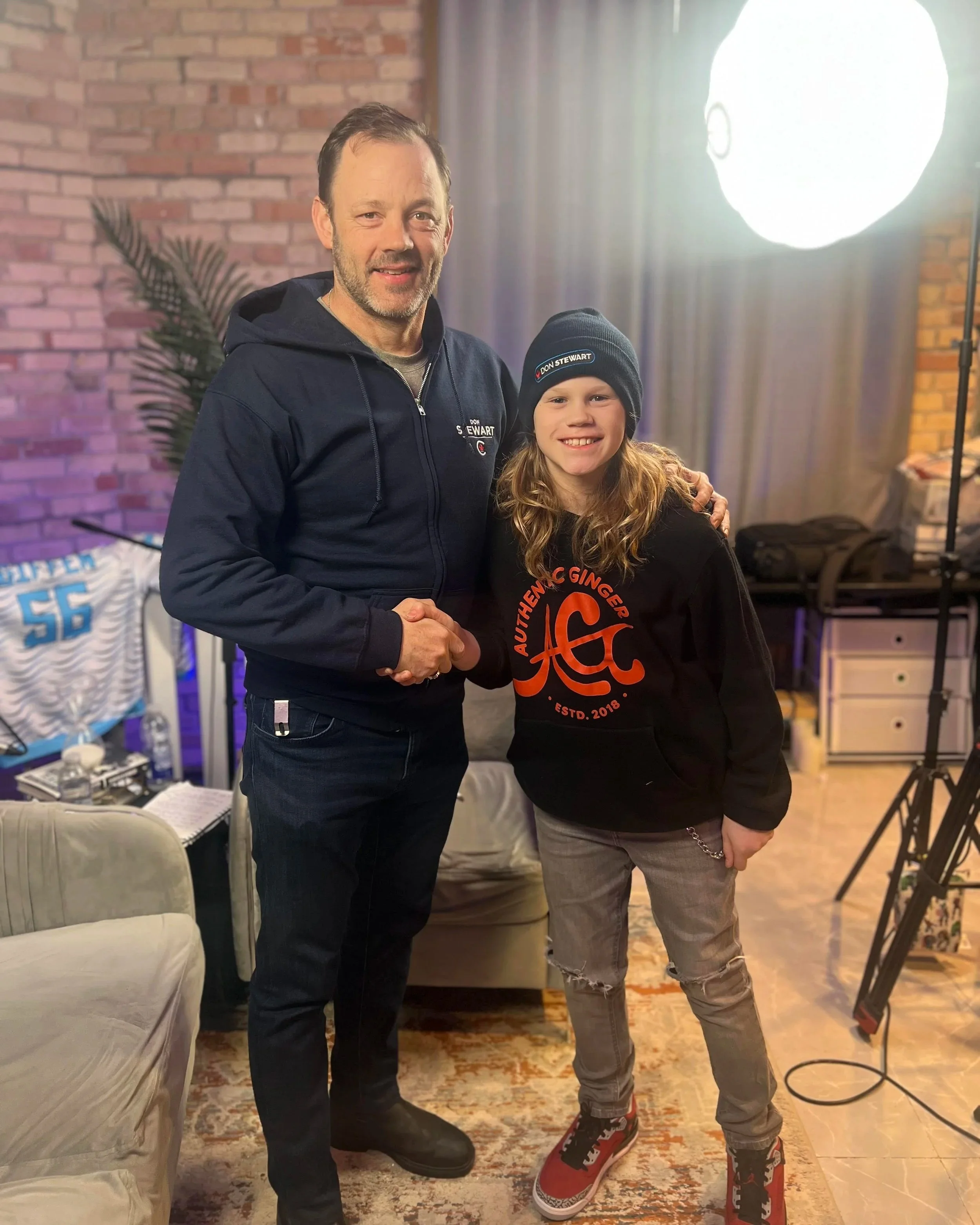
A few days before the 2025 campaign, Don came on Rory’s podcast and treated my son with a seriousness that is rarer than it should be in public life. Not as a prop. Not as a novelty. Not as a kid to be humoured for thirty seconds before the adult conversation resumed. He treated him like a contender. He answered him directly. He spoke about real issues. I respected him for that.
I still do.
But I could not vote Conservative.
And the reason is bigger than one candidate, one campaign, or one policy plank. It is that, on criminal justice and on the way we now speak about men, we have lost something essential.
We have lost the habit of empathy.
Men are not women. They are not children. They are not pets to be managed, praised, or feared according to how useful or compliant they are. They are human beings. And a society that loses the capacity to feel for men as men — in their strength, confusion, roughness, failure, protectiveness, loneliness, and hunger for dignity — will eventually break far more than its justice system.
It will break families.
It will break trust between men and women.
It will break boys trying to become decent without first learning to be ashamed of themselves.
And it will break public life, because once a culture learns to speak about men mainly as threats, suspects, or disappointments, it becomes almost impossible to build anything healthy together.
That is part of what I see now.
I work with frontline clients. I see men who are poor, unstable, addicted, mentally ill, traumatized, and often already half abandoned before the state ever touches them. Then they enter a criminal justice system increasingly shaped by politics, optics, and moral simplification. They lose housing. They lose contact with their children. They lose what little structure remained. And the public is invited to treat that collapse as proof of their worthlessness.
That is not wisdom.
It is a cultural failure masquerading as moral seriousness.
To be clear, some men are violent. Some men are dangerous. Some women and children live in fear, and that reality must be taken with utmost seriousness. But if the only empathy left in a society flows in one direction, something has already gone badly wrong.
Because empathy is not endorsement.
Mercy is not denial.
And understanding how men break is not the same thing as excusing what broken men may do.
In fact, it is the only serious starting point if you want less violence, not more. If you want stronger families, not weaker ones. If you want boys to become trustworthy men. If you want girls to grow up among fathers, brothers, partners, colleagues, teachers, and leaders who are more grounded and less full of buried shame and rage.
What is breaking down in our society is not only law, policy, or political tone. It is connection. It is the ability to recognize that men, too, carry pain, longing, and wounds that matter.
Very few people will name that.
Fewer still will admit how much depends on it.
But I think it is true.
And it is one reason I could not vote for a politics that treats criminal justice as theatre and men as a class best understood through suspicion.
That road will not save us.
It will make us colder, crueler, and more alone.