When the Carriers Fail
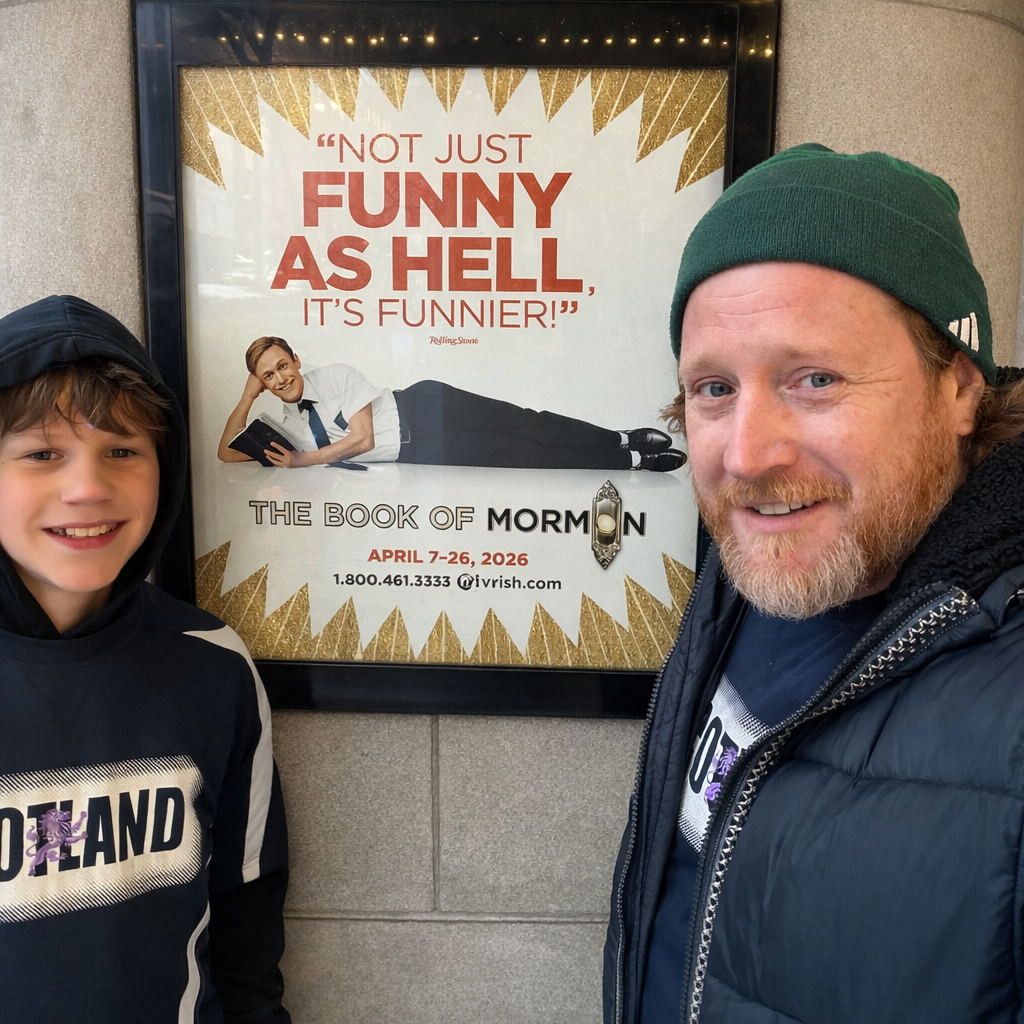
The Book of Mormon is back in Toronto for a limited Mirvish run at the Princess of Wales Theatre, April 7–26, 2026. Grateful to Mirvish for hosting the Giffen podcast lads for the second-night performance. The show has been through Toronto before, including a sold-out Mirvish run in 2024, and it still lands with that same strange mix of irreverence, precision, and uncomfortable truth.
I first saw it on Broadway in its first year, when its shock still felt fresh and its satire hit like a controlled detonation. Seeing it again now, nearly fifteen years later, through Rory’s South Park-loving eyes, was something else. He caught the chaos, the absurdity, the speed, the shamelessness. But he also caught the heart beneath the mockery.
That is what people often miss about this show.
Yes, it is savage. Yes, it goes after missionary culture, religious naivety, doctrinal absurdity, and the polished confidence of people selling certainty. But underneath all of that, The Book of Mormon understands something real about faith: however compromised its messengers may be, human beings still hunger for meaning, belonging, hope, and a story strong enough to carry suffering.
That is where the thing gets dangerous.
Religion is one of the most powerful forces on earth. It can sanctify cruelty. It can excuse domination. It can baptize ego and call it truth. But it can also be translated, reclaimed, and turned toward mercy, courage, and actual transformation, even after its official carriers have failed it badly.
That tension is why the musical still works.
It is not finally about religion being false. It is about religion being humanly carried — and therefore always capable of becoming ridiculous, coercive, cruel, beautiful, or redemptive. The danger is not faith itself. The danger is what happens when damaged or ambitious people start confusing themselves with God.