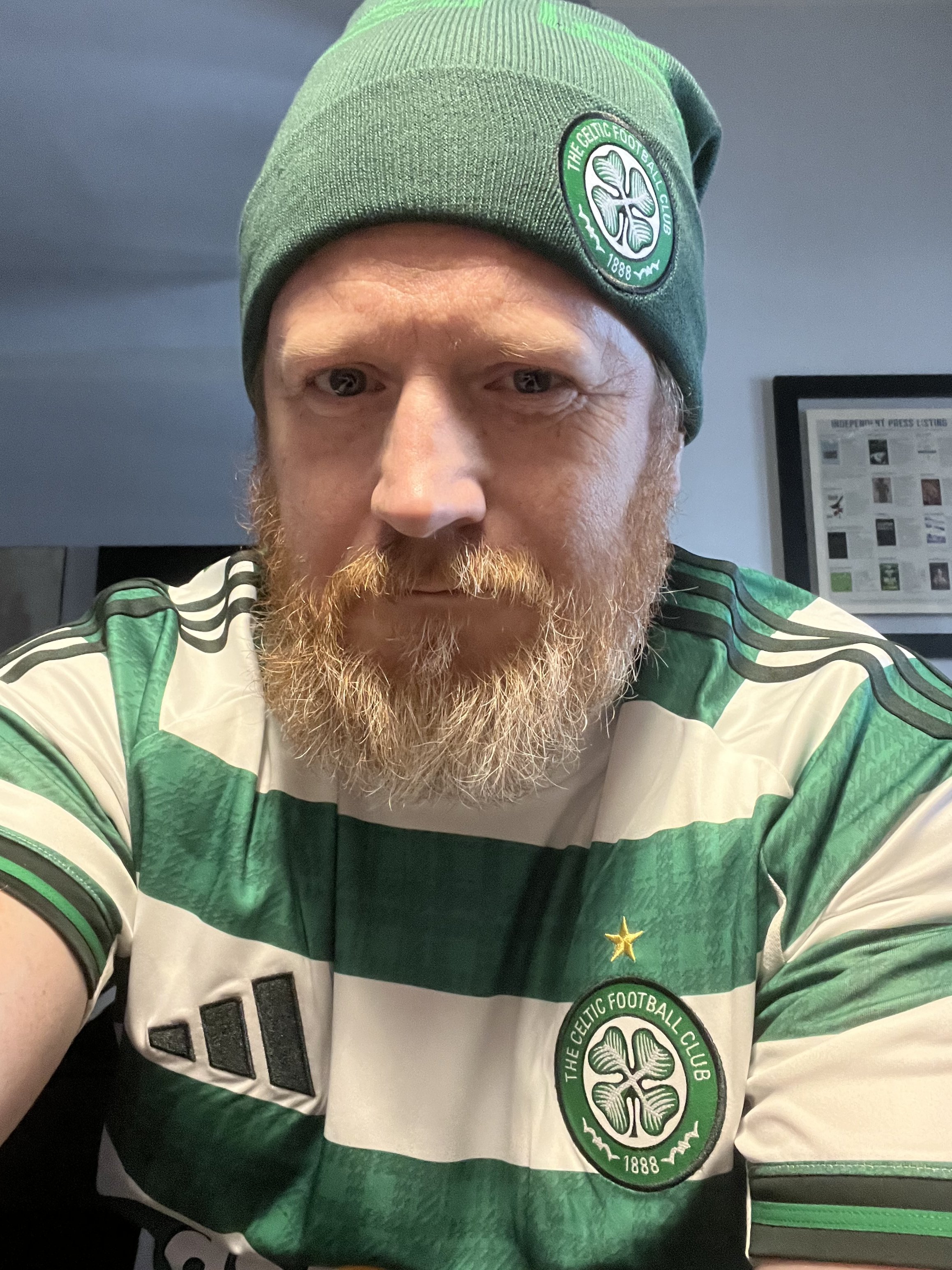
Why It Matters to Me That I’m Irish
It matters to me that I’m Irish because Irishness, in my life, was never just charm, music, or sentiment.
It carried weight.
I grew up hearing the phrase Black Irish before I understood what it meant. I understand it better now. Not as a slogan. Not as a costume. But as a sign that identity can carry tension, memory, faith, migration, and the ache of not fitting neatly where other people expect you to. In my family, Irishness was never only pride. Sometimes it came wrapped in silence. Sometimes in conflict. Sometimes in a kind of inherited shame that nobody quite named, but everybody felt.
My father was a young Protestant man from near Falkirk. My mother was an eighteen-year-old Irish Catholic girl who played the organ at Mass twice a week. Those worlds were not supposed to meet cleanly. I was born where they collided.
Some people are born into families. Some are born into fault lines.
That matters.
Because history does not disappear just because people move.
Families cross oceans. Postal codes change. Accents soften. People reinvent themselves. But the old stories keep breathing. They show up in what gets celebrated, what gets mocked, what gets buried, and what nobody wants named out loud.
The Irish story is older than my family, but it runs through it all the same.
An island colonized.
A people starved.
A language pushed aside.
Families scattered.
Faith becoming both shelter and dividing line.
That kind of history leaves a mark.
And some of those marks are ugly.
Black Irish and Fenian blood.
I learned early that identity is not always handed down gently. Sometimes it comes through songs, slogans, and old fault lines children are made to carry before they can name them. I heard enough to know that Irishness could be worn as pride, but also hurled as insult, warning, or threat.
That is part of why it matters to me now.
Reclaiming the name is one thing. Refusing the poison that sometimes traveled with it is another.
So when I say it matters to me that I’m Irish, I do not mean I want the cliché version. I do not mean green plastic, fake accents, or a rented identity for one weekend in March.
I mean the deeper inheritance.
The long memory.
The black humour.
The poetry with teeth.
The stubborn dignity.
The refusal to let power have the final word.
The instinct to recognize the wounded, the outsider, the one who does not fit cleanly into respectable stories.
That feels familiar to me.
Because I know something about silence. I know something about institutions, buried stories, and the cost of pretending old wounds do not still shape the room. I know what it is to decide whether you will carry inherited shame quietly or tell the truth and risk making people uncomfortable.
At some point I realized the question was never whether I was Irish enough.
The question was whether I would carry the shame that sometimes came with it. Whether I would inherit the old poison along with the old name. Whether I would accept a tribal script that confuses memory with menace and pride with contempt.
I chose not to.
That is why it matters to me that I’m Irish.
Because some people inherit pride without effort. Others have to reclaim it.
Because memory matters.
Because story matters.
Because the names we carry are sometimes wound, inheritance, and defiance all at once.
And because as I get older, I find myself less interested in respectability and more interested in truth. The Irish part of me does not want a performance. It wants something more honest than that. Something with grief in it. Something with laughter in it. Something with faith, fight, and a bit of fire still left in it.
To be Irish, for me, is not to romanticize old sectarian lines. It is not to pretend the old songs were harmless. It is not to dress up inherited division as courage. It is to tell the truth about what was passed down, what was damaged, and what is still worth reclaiming.
It is to say that history formed me, but does not get to imprison me.
It is to say that I can honour the depth, humour, faith, resilience, and defiance of my people without carrying forward every bitterness that came with the package.
It is to say that Black Irish means more to me now than mystery or style. It speaks to collision. Mixed inheritance. Long memory. Darkness survived. Identity carried through contradiction.
So as St. Patrick’s Day gets closer, maybe that is enough.
Maybe it is enough to raise a glass, tell the truth, and wear the name without apology.
And if you happen to find me at Belfast Love on King, buy any ginger in the place a drink and I may just return the favour with 50% off some Authentic Ginger merchandise.
Luck of the Irish and all.