Why the West Bank Matters
This week, plenty of people will wear green, raise a glass, and speak proudly about Ireland, memory, and oppression.
Fair enough.
But memory that only reaches backward toward our own people is not memory at all. It is vanity dressed as heritage.
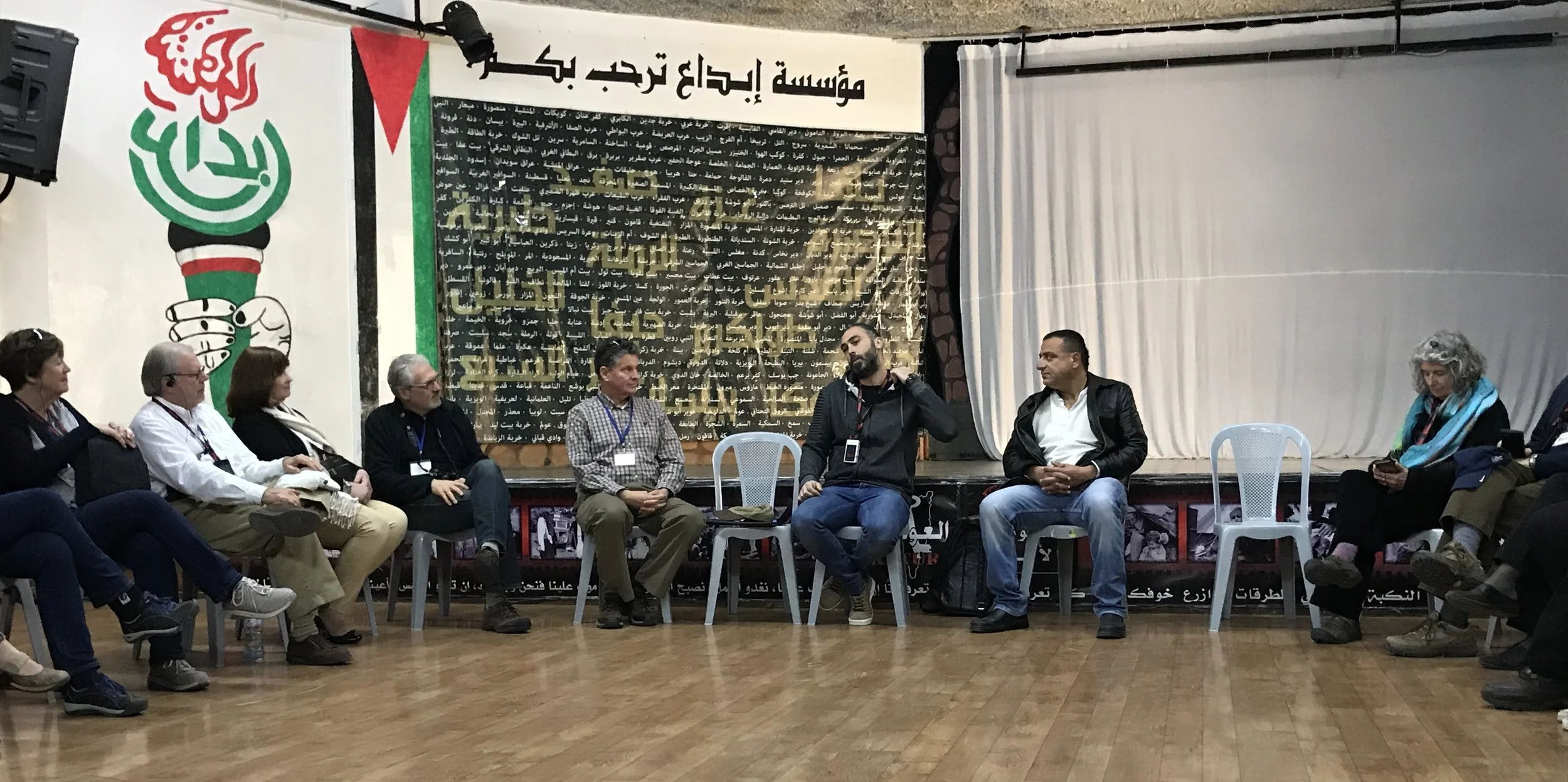
For just under a month in early 2018, I was living and studying in Jerusalem, not as a tourist, but in formation. During that time, I spent days in the occupied West Bank, including Dheisheh Palestinian Refugee Camp just outside Bethlehem.
I went there.
I walked there.
I listened there.
And I made myself a promise.
If the time came when speaking plainly mattered, I would not hide behind vagueness, caution, or selective concern.
My Holy Land photos come from that period. I also wrote about that experience in my 2020 memoir, Redemptive Trauma.
Dheisheh has existed since 1949. It was never meant to be permanent. Yet generation after generation has now been born there under conditions that were supposed to be temporary, without sovereignty, without real freedom of movement, and without the return their families were told to stop expecting.
What I saw was not abstraction.
Not a talking point.
Not a campus slogan.
I saw ordinary human life under extraordinary constraint.
Walls shaping movement.
Homes built impossibly close.
Children playing wherever space could still be found.
Communities learning how to breathe inside pressure that was never meant to be normal.
We spent time at the Ibdaa Cultural Center, a place devoted to children, arts, sports, and education. It taught something the powerful rarely understand: resistance is not only protest. Sometimes resistance looks like care. Teaching a child to read. Giving them somewhere to dance. Helping them hold onto dignity when the world keeps trying to reduce them to a problem.
A Palestinian social worker named Hamzeh said something to us that I have never forgotten:
“We have been told who we are. You have been told who we are. Again and again.”
That line has stayed with me because it names more than propaganda. It names the machinery of moral distancing. The steady repetition required to make one people’s fear feel real and another people’s suffering feel negotiable.
Since I was there in 2018, conditions in the West Bank have become even more severe. Humanitarian agencies have documented intensified movement restrictions, widespread displacement tied to settler attacks, demolitions, military operations, and increasing barriers to daily life and aid access.
So yes, the West Bank matters.
It matters because Palestinians are not symbols in somebody else’s theology, ideology, or security doctrine.
They are human beings.
And I cannot claim Irish memory this week while withholding Palestinian memory because it is inconvenient.
I cannot speak about colonization only when it is safely buried in the past.
I cannot honour a history of occupation in song and then go mute in the face of occupation in the present.
I cannot ask others to remember my people and then look away from another people being pressed into erasure.
Looking away does not make this disappear.
It only makes forgetting easier.
And forgetting, when you have seen for yourself, is a form of betrayal.