Mine Was Softened for Me
Kevin Bridges, a Glasgow accent and the sound of a home I cannot remember
Kevin Bridges had to soften his accent to cross the Atlantic.
Mine was softened for me.
Last year, Bridges took his comedy across Canada and the United States. Afterwards, he said he had tried to “soften it a little bit, but not be a fraud.”
There is an entire immigrant life inside that sentence.
How much of your voice do you change so other people can understand you? And how much can you change before you no longer sound like yourself?
Bridges travelled west carrying Glasgow in his voice.
I came back east carrying Glasgow everywhere except in mine.
I have always loved comedy for the unvarnished truth it reveals.
Priests taught me doctrine. Comedians taught me when people were lying.
I quoted Tommy Tiernan in Redemptive Trauma:
“We used to grow priests in Ireland. We used to grow them from bits of people we didn’t like.”
I used that line as the epigraph to a chapter called “New Life.” Its opening paragraph described the freckle-faced ginger child from the motherland whose parents had funny accents. I wrote that eventually a person has to look backwards and integrate.
To understand who you are—and whose.
Apparently, it took me another six years and a one-way ticket.
Trevor Noah made me unafraid to speak publicly about my mental health. And Nikki Glaser—well, as I wrote earlier this year, thank God for Nikki Glaser.
But Kevin Bridges reaches somewhere else.
He was born in Glasgow and grew up Catholic in Clydebank.
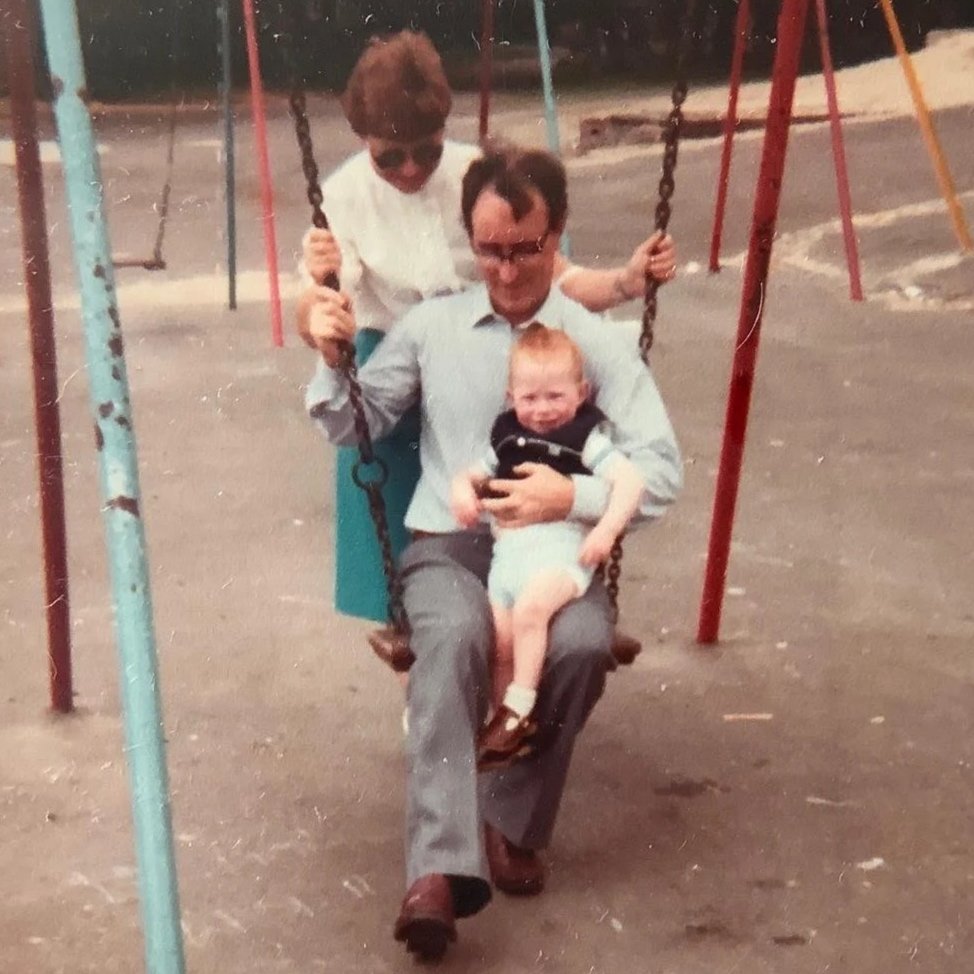
I was born at the Queen Mother’s Hospital and lived in Dennistoun for fourteen months before my family emigrated.
We began in the same city.
He stayed.
I was taken across an ocean.
He learned the place from inside it. I inherited it through stories, football, religion and family warnings.
I do not remember Glasgow. That has always unsettled me.
My life began somewhere I could return to only through other people’s voices: grandparents describing rooms, parents repeating family stories, accents gradually softening as the years in Canada accumulated.
Kevin Bridges cannot give me those memories back.
But when he speaks, I recognize something.
Not simply the accent. Accents can be imitated.
When Mike Myers and Mark McKinney performed Scottish Soccer Hooligan Weekly on Saturday Night Live, two Canadians were performing a Scottish caricature for a Canadian boy born in Glasgow.
I was thirteen.
I did not understand the country.
I understood the desire.
Bridges is not performing Scottishness from the outside. He understands what is happening underneath a Glasgow sentence.
He can describe sitting at Mass, allowing his mind to wander towards the body of Christ on the cross and wondering how Jesus would have managed at his school.
I spent years studying Christology and preaching Christ crucified.
Bridges looked at the same crucifix and noticed Jesus had a six-pack.
I recognize that Catholic imagination immediately. The sacred and the ridiculous are not enemies. They have occupied the same churches, schools and family tables for centuries. The irreverence is possible because the story is familiar enough to be family property.
He can also locate an entire class system in what children look like when they return to school after the holidays. Some come back with a tan and a new schoolbag. Others return with a black eye and a new surname.
That is not poverty presented as regional scenery.
It is precise social knowledge.
Bridges notices the small negotiations people make to preserve their dignity: the confidence covering embarrassment, the threat disguised as an offer, the absurd language used by employers, politicians, advertisers and men trying to impress their friends.
In Glasgow, he explains, “how?” can mean “why?”
A question becomes a challenge.
The accent is not decoration. The meaning lives in the delivery.
That is what people outside Glasgow can miss when they say they cannot understand him. They may hear the individual words perfectly well and still miss what has happened underneath them.
Bridges hears it, then tells the truth before anyone has time to make the story respectable.
It would be easy to romanticize where that humour comes from: Glasgow endured poverty, violence, sectarianism, addiction and industrial decline, but at least it produced very funny people.
That would be sentimental nonsense.
Poverty is not improved by producing good comedians. Deprivation is not a charming regional tradition. There is nothing noble about people needing humour to survive conditions they should never have been forced to endure.
The suffering is not the gift.
The gift is the refusal to let suffering control all the language.
That refusal has always spoken to me.
My own writing has often begun where respectable language stopped being useful: mental illness described as weakness, institutional protection called discretion, trauma renamed conflict, silence presented as dignity.
Comedy breaks those arrangements.
It says what is actually happening—sometimes brutally, sometimes obscenely, often before the rest of us have decided whether telling the truth is socially acceptable.
Bridges does that in the voice of the place where I was born.
My Canadian accent is not evidence against that birthplace.
It is evidence of what happened after it.
Canada is where I learned to speak. It is where I went to school, made friends, found faith, became a priest, lost the priesthood, became a father and spent nearly all the years I can remember.
Of course I sound Canadian.
I will not manufacture a Glasgow accent now. An accent is not a costume, and pretending would turn homecoming into another performance.
Mine may never return.
It may never have existed long enough to return.
But I am learning to hear what a Glasgow voice can carry: the Catholic school beneath the joke; the class system inside the schoolbag; the warning inside the question; affection protected by mockery; pain denied the final word.
Sometimes, when Bridges speaks quickly, the joke reaches me half a second late.
That half-second contains forty-four years.
But increasingly, I do not need to translate.
I cannot remember Glasgow.
I do not sound like Glasgow.
But when Kevin Bridges speaks, I recognize it.
Most of the time, I even get the joke on time.
Giff on the Way Home.