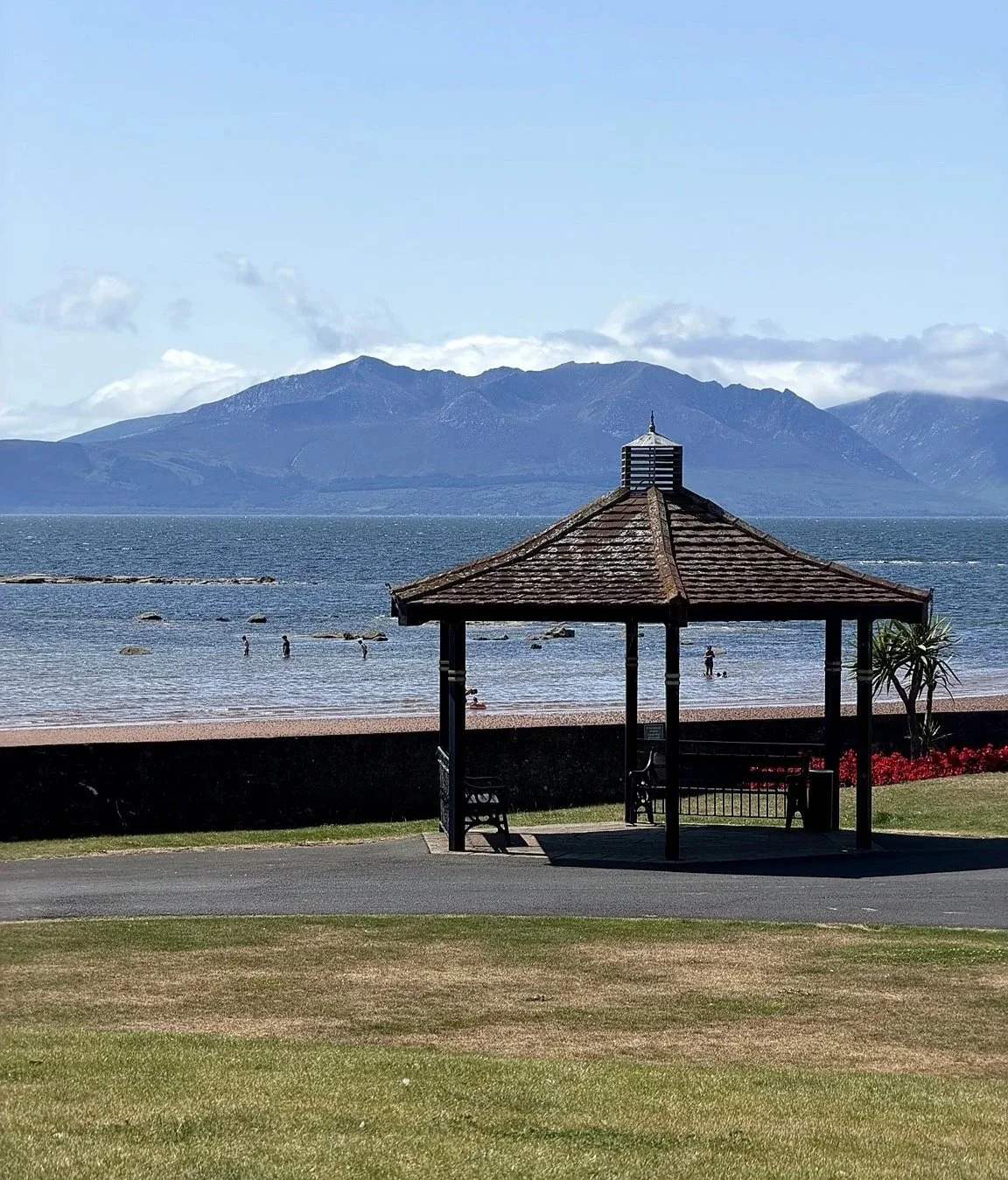
The Air Off the Firth of Clyde
On Saturday morning, I woke up in County Wicklow. By evening, I was back in West Kilbride.
The journey was short enough to make the distance between countries feel slightly ridiculous. Ireland had once existed across an ocean and somewhere inside family memory. Now it was a £20 flight and a bus ride.
But the real surprise came when I returned.
I stepped back into West Kilbride and felt the air coming off the Firth of Clyde. Salt, wind and the outline of Arran across the water. I had been away for less than forty-eight hours, but it was long enough to notice that coming back already felt different.
Apparently, I had begun to miss the place.
I have since been conducting a careful and entirely scientific assessment of whether I should remain in Scotland. The evidence includes sea air, football, an encouraging number of gingers and the discovery that another country can fit inside a weekend.
These may not be the criteria ordinarily recommended for making a major life decision. Still, they are proving surprisingly persuasive.
The air remains the strongest argument. In West Kilbride, it arrives without asking permission. The weather can change three times during a walk, but the air is unmistakable.
I had forgotten that air could make a place feel familiar.
Then there is the football.
Football in Scotland is not something that happens at the weekend. It determines clothing, travel, conversation, mood and whether two strangers can remain polite while waiting for the same train.
In Canada, saying that I supported Celtic was usually sufficient information. Here, it is merely the beginning of the interview.
People want to know how long I have supported them, where my family is from, whether I have been to Paradise and what I thought of the team selection. Neutrality is theoretically permitted, although I have yet to see convincing evidence of it in practice.
There are also gingers everywhere.
This may not sound significant to those who have never spent most of their lives looking like a rare imported variety. In Scotland, I am finally within normal local tolerances.
Nobody appears startled by the hair. Nobody needs an explanation. There are entire families who look as though we may have been assembled from the same limited collection of spare parts.
The stronger case for Scotland, though, is quieter than any of that.
I know the trains along the Ayrshire coast. I have developed opinions about railway connections and Scottish football that nobody requested. Glasgow no longer feels like somewhere I am visiting, and returning to West Kilbride now carries the quiet familiarity of heading back rather than heading away.
None of this proves anything. Scotland has made no promises, and neither have I.
But I left for two days and noticed what it felt like to return.
As the air came off the Firth of Clyde, I realized the question had changed.
It was no longer whether I had come home.
It was what might happen if I stayed.