The Meeting of the Waters
Yesterday, I used a lot of words to describe what happens when two people who loved the same friend meet in Ireland and, through the stories they carry, bring part of him back to life.
Thomas Moore needed sixteen lines to explain why the place mattered.
He wrote The Meeting of the Waters after visiting County Wicklow in 1807. The poem appears to be about a landscape. It is really about the friends who make the landscape matter.
Today, I’ll let him say the rest.
There is not in the wide world a valley so sweet
As that vale in whose bosom the bright waters meet;
Oh! the last rays of feeling and life must depart,
Ere the bloom of that valley shall fade from my heart.
Yet it was not that nature had shed o’er the scene
Her purest of crystal and brightest of green;
’Twas not her soft magic of streamlet or hill,
Oh! no—it was something more exquisite still.
’Twas that friends, the beloved of my bosom, were near,
Who made every dear scene of enchantment more dear,
And who felt how the best charms of nature improve,
When we see them reflected from looks that we love.
Sweet Vale of Avoca! how calm could I rest
In thy bosom of shade, with the friends I love best,
Where the storms that we feel in this cold world should cease,
And our hearts, like thy waters, be mingled in peace.
—Thomas Moore, The Meeting of the Waters, from Irish Melodies (1808)
Giff on the Way Home.
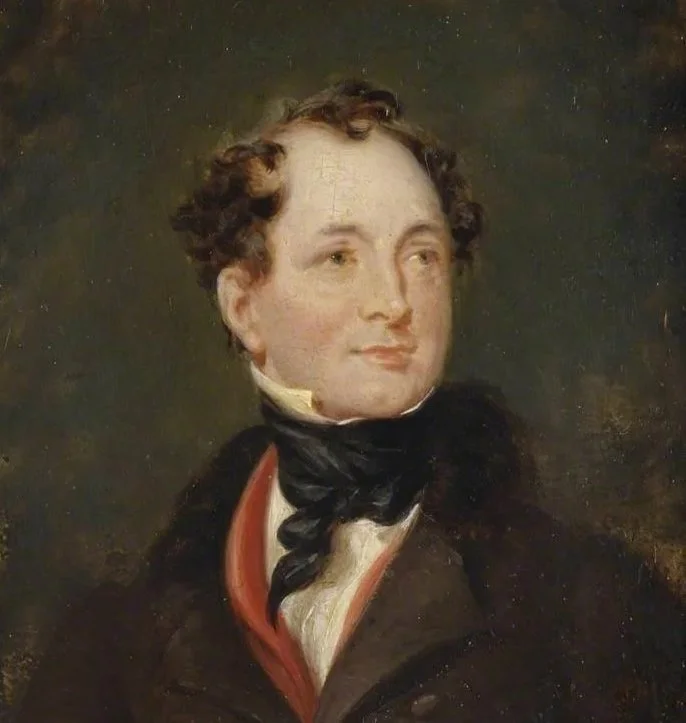
Thomas Moore (1779–1852) was a Dublin-born Irish poet, musician and political writer, celebrated during his lifetime as Ireland’s national bard. In his Irish Melodies, he wrote new English lyrics for traditional Irish airs, carrying songs of memory, friendship, dispossession and home far beyond Ireland.
Portrait by Sir Thomas Lawrence; public domain.